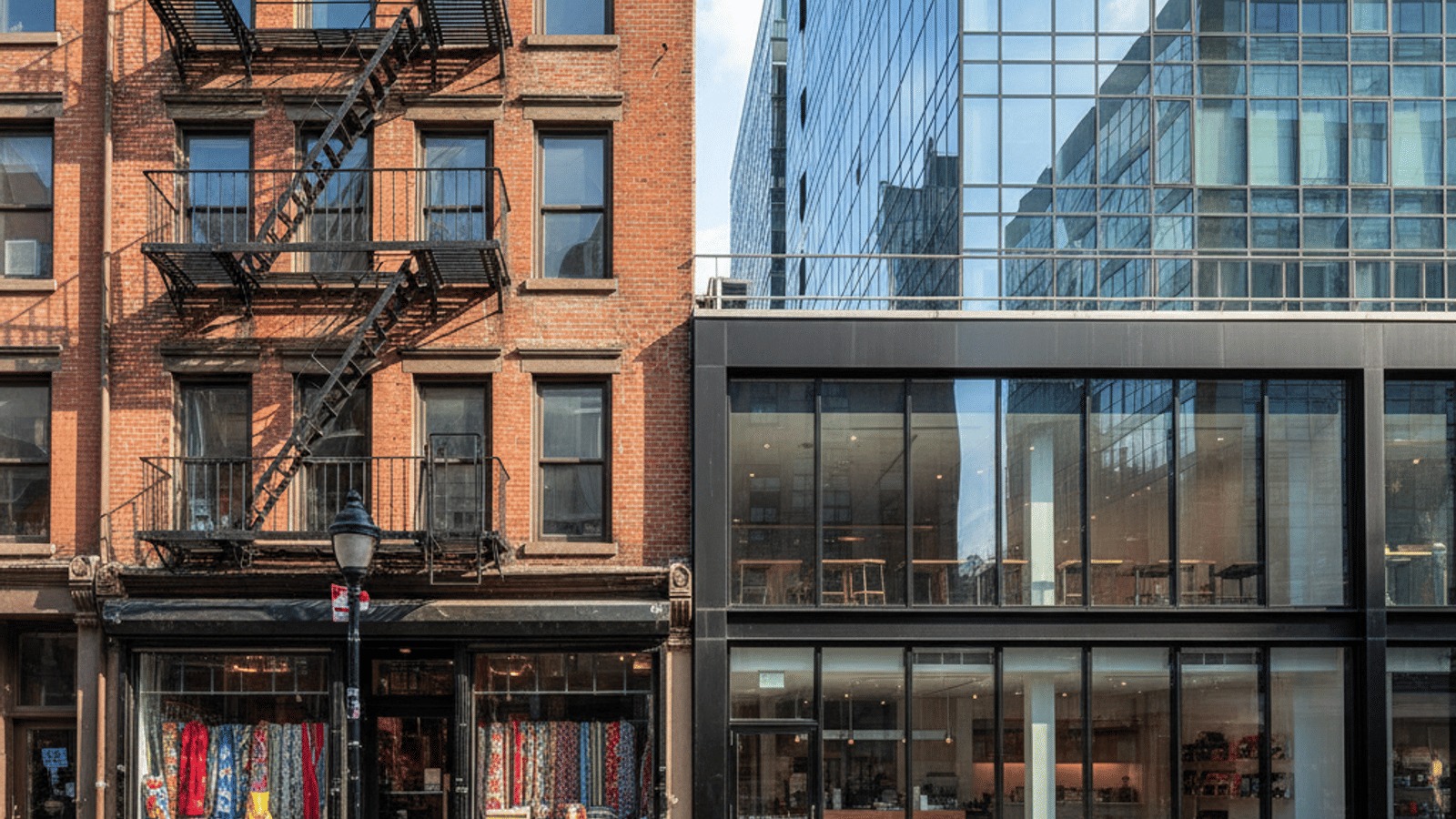
If you walk down Orchard Street on a Tuesday morning, you might see a fourth-generation fabric merchant opening up shop right next to a high-end coffee roaster serving $8 lattes. That contrast defines the Lower East Side (LES). It is a neighborhood of extremes, where historic tenement walk-ups sit in the shadows of glass-walled luxury high-rises. Because the housing stock is so incredibly diverse, homes for sale in the Lower East Side is rarely a cookie-cutter process.
The market in the LES operates differently than the Upper East Side or even the West Village. We currently see a "tale of two markets" depending on exactly what you own. Inventory levels fluctuate, but generally, move-in ready condos move faster than unrenovated co-ops. However, regardless of market conditions, selling here requires a strategy that acknowledges the unique buyer demographics—from creatives and professionals to investors seeking the next big appreciation jump.
Whether you own a classic HDFC unit or a modern condo, understanding these nuances is the first step toward a successful sale.
Step 1: Accurate Pricing in a Micro-Market
Pricing a home in the Lower East Side is as much an art as it is a science. You can’t simply look at the price per square foot of a sale three blocks away and assume your apartment is worth the same. In this neighborhood, value shifts block by block. A unit on a quiet stretch of Grand Street might command a different price than a similar layout right above the nightlife energy of Ludlow or Rivington.
You also have to account for the "Essex Crossing Effect." The massive development has anchored the neighborhood with amenities like the new Essex Market and a movie theater, generally boosting values for nearby properties. However, buyers are savvy; they know exactly which streets are impacted by noise or ongoing construction.
Beyond location, the physical attributes of your unit dictate the price ceiling. In a neighborhood famous for walk-ups, floor level is a critical property valuation factor. A second-floor unit often trades at a premium compared to a fifth-floor walk-up, simply because the buyer pool shrinks as the stair count rises. Unless you have private roof rights that justify the climb, higher floors in non-elevator buildings often need to be priced aggressively to attract attention. Using a comprehensive home valuation guide specific to downtown Manhattan is essential to avoid the dangerous trap of overpricing.
Step 2: Know Your Building Type (Crucial for LES)
Before you even think about listing, you need to be crystal clear on your building's classification. The Lower East Side has a higher concentration of HDFC cooperatives than almost any other part of Manhattan below 96th Street, alongside standard co-ops and new condos. Each type dictates a completely different selling timeline and buyer pool.
Condominiums: If you are lucky enough to own a condo here, your path is the most straightforward. Condos are highly sought after by investors and buyers who want to avoid the intrusive co-op board process. Because they are rarer in the historic sections of the LES, they often command a significant price premium.
Market-Rate Co-ops: These are the standard cooperative buildings. You will be dealing with a board interview, financial requirements, and likely a flip tax. The buyer pool here consists of end-users who intend to live in the property, as subletting rules are usually strict.
HDFC Co-ops: This is where things get complex. HDFC (Housing Development Fund Corporation) buildings were originally created to provide affordable housing, and they come with income caps for buyers. These caps are tied to the Area Median Income (AMI). Some buildings have strict caps (e.g., 120% AMI), while others are effectively market-rate with very high caps (165% AMI or higher). Furthermore, many HDFC buildings have high flip taxes—sometimes as high as 30% of your profit—to keep the building’s reserve fund healthy.
Selling an HDFC requires finding a specific type of buyer: someone who meets the income restrictions (isn't "too rich") but has enough liquid cash to make a 20% or even 50% down payment, as banks are often hesitant to lend in certain HDFC buildings. It is a balancing act that requires an agent who understands HDFC resale rules inside and out.
Step 3: Hire a Lower East Side Specialist
Because the inventory here is so quirky, hiring an agent who strictly works in Midtown or the Upper West Side can be a mistake. You need a representative who knows how to sell the "vibe" of your specific block. A local specialist understands why a buyer might pay more to be closer to the F/M/J/Z lines at Delancey-Essex, or why a view of the Seward Park cooperative gardens adds tangible value.
Beyond neighborhood knowledge, your agent needs deep experience with selling a co-op in NYC, specifically with downtown boards. Co-op boards in the LES can be just as rigorous as those uptown, but they might prioritize different things. A local agent will know the management companies, the unspoken financial requirements of specific buildings, and how to package a buyer so they pass the board review. They also likely have a network of buyers specifically hunting for that downtown, authentic loft-style living, which is distinct from the buyer looking for a doorman building in Murray Hill.
Step 4: Prepping and Staging for the Downtown Buyer
Space is a luxury in the Lower East Side. Many historic apartments here are charming but compact. When you are preparing your apartment for sale, your goal is to make the space feel breathable and bright.
Let there be light Light is often the number one selling point in pre-war buildings. If your unit faces a brick wall or an air shaft, you need to compensate. Clean the windows thoroughly—grime builds up fast in the city—and use mirrors strategically to bounce whatever natural light you have into the living areas.
The "Walk-Up Factor": If you are in a walk-up, you cannot hide the stairs, but you can manage the experience. Make sure the building hallway is spotless. If your building uses a smart intercom or a "virtual doorman" system, highlight that. It alleviates the security concerns some buyers have about non-doorman buildings.
Declutter and define: In smaller layouts, clutter is a deal-killer. Buyers need to see that a queen-sized bed fits in the bedroom and that there is room for a sofa and a desk in the living room. Utilizing vertical storage during staging shows potential buyers that the apartment is livable.
Embrace the vibe: Don't sterilize the apartment too much. Buyers coming to the LES want character. Exposed brick, original molding, or fire escapes are assets here, not eyesores. Your staging tips for small spaces should focus on modernizing the look while keeping that authentic downtown grit that makes the neighborhood famous.
Step 5: Marketing Your LES Home
Once the home is prepped, the marketing needs to tell a story. In a digital-first world, professional photography is non-negotiable. This is especially true for units that might be on lower floors where light is scarce; a professional photographer knows how to balance exposure to make the room look inviting, not gloomy.
In New York City, floor plans are mandatory. Buyers will often skip a listing entirely if they can't visualize the layout. This is vital in the LES, where "railroad" apartments or modified layouts can be confusing in photos alone.
When writing the listing description, we focus on the lifestyle. We highlight proximity to the East River Park for morning runs, the culture of the Tenement Museum, or the convenience of Essex Market. We avoid phrases that steer toward specific family makeups to comply with Fair Housing laws, focusing instead on "spacious layouts" or "flexible rooms" that appeal to everyone from solo artists to roommates and partners.
Step 6: Navigating the Board Approval Process
If you are selling a co-op, accepting an offer is just the beginning. The board approval process is often the biggest hurdle in the transaction.
After the contract is signed, the buyer—guided by your agent—must compile the "board package." This is a massive dossier containing tax returns, reference letters, asset verification, and employment history. In the LES, where many buildings are self-managed or have very active boards, this review can be granular.
The timeline from an accepted offer to the board interview usually runs 2 to 4 months. As a seller, your role is largely patience, but also ensuring your agent is vetting the buyer's financials before the offer is accepted. You do not want to tie up your property for three months only to have the board reject the buyer because their debt-to-income ratio was too high.
Step 7: Understanding Seller Closing Costs
Many sellers focus on the sale price and forget to calculate the "net" number until they sit at the closing table. Closing costs in NYC are substantial and typically deduct about 8% to 10% from your sale price.
Here is how the costs generally break down for a seller:
• Broker Commission: Usually 6% of the sale price, split between the buyer's agent and your listing agent.
• NYC Transfer Tax: The city charges 1% of the price for sales under $500,000, and 1.425% for sales over $500,000.
• NYS Transfer Tax: The state charges roughly 0.4% of the sale price ($4 per $1,000).
• Flip Tax: This is specific to co-ops. It is a fee paid to the building's reserve fund, ranging from 1% to 3% of the sale price (or significantly higher in HDFCs).
• Attorney Fees: A flat fee, typically around $3,000.
It is smart to run these numbers early. If you are selling an apartment for $850,000, the transfer taxes alone will be over $15,000. Knowing this helps you negotiate from a place of strength.
Step 8: The Timeline: From Listing to Closing
How long will it take to get your money? That depends almost entirely on the building type.
If you are selling a condo, the process is relatively fast. Once a contract is signed, you can often close in 60 to 90 days, provided the buyer's financing is in order.
For co-ops, you must build in a buffer. Between the board package preparation, the management company's review, the board interview, and final scheduling, a 3 to 6-month timeline is standard. Delays often happen during the loan commitment phase or if the board asks for additional documentation. Patience is key.
Ready to Sell Your Lower East Side Home?
Selling a condo in the Lower East Side is a special process that involves more than just sticking up a sign in the window. You need to know what values certain micro-neighborhoods are going to appreciate, how to work with building regulations, as well as what it takes to market a specific unit as something that stands out when there are so many others. This is where preparation comes in handy.
First of all, it is necessary to determine how to begin. A great way to do this is to take a look at where you are now. This means you can get in contact with a professional to determine what your home is worth through a process called a comparative market analysis.
FAQs
How long does it take to sell an apartment in the Lower East Side?
The timeline is different for each property type. Condos can go from listing to closing in about 3 to 4 months, while co-ops take around 4 to 6 months because of the board approval process. If you are in an especially strict HDFC, it may even take longer to find a qualified buyer.
Do I pay the flip tax or does the buyer?
In most Lower East Side transactions, the seller pays the flip tax. However, this is a negotiable term in the contract. In a strong seller's market, you might be able to shift this cost to the buyer, but the building's offering plan usually designates the seller as the responsible party.
What's the difference between selling an HDFC co-op and a regular co-op?
The main differences have to do with income caps and profit restrictions. When selling an HDFC, you need to make sure your buyer's income does not exceed the building's specific AMI cap-e.g., 120% or 165%-and that you will be subject to a much higher flip tax on your profit than you would get in a market-rate co-op.
Is now the time to sell in the Lower East Side?
Market timing depends on inventory levels and interest rates, but, in general, LES holds its value very well because of low inventory and high demand. If you have owned your home for several years, despite short-term market fluctuations, you will have built substantial equity.
How much are closing costs for sellers in NYC?
You need to budget between 8% and 10% of your final sale price for closing costs, which includes broker commissions, NYC and NYS transfer taxes, attorneys' fees, and any building-specific flip taxes.