The Lower East Side real estate market moves quickly, demanding a clear understanding of the costs involved in buying or selling a property here. Whether you are looking at a historic walk-up near Seward Park or listing a modern condo, knowing exactly what to expect at the closing table is essential for protecting your financial interests.
Understanding real estate commissions in the Lower East Side NY means looking beyond the sticker price of the property itself. Broker fees represent one of the most significant transaction costs in the Manhattan market today. By breaking down how these percentages work in 2026, buyers and sellers can enter negotiations with confidence.
How Real Estate Commissions Work in the Lower East Side
In the Manhattan market, real estate commissions are structured as a percentage of the final sale price, which is paid when the transaction closes. These funds compensate the brokerages for the extensive work required to bring a deal to the finish line, including marketing the property, vetting buyers, and navigating complex board approvals.
While these fees are a substantial part of the closing costs, it is important to remember that they are never fixed by law. Every commission rate remains fully negotiable between the client and their chosen brokerage. In New York City, total commissions currently hover around an average of 5% to 6%, though the exact number depends heavily on the property type and the specific services provided.
Average Broker Fees and Commission Rates
Looking closely at the local data, the average total commission rate across New York City in 2026 sits at approximately 5.69%. This percentage applies directly to the final sale price and is traditionally divided between the brokerage representing the seller and the brokerage representing the buyer.
Historically, this total fee was split relatively evenly, with about 2.93% going to the listing agent and roughly 2.76% directed to the buyer's agent. Today, sellers also have the option to explore discount brokerages or flat-rate models if they prefer an alternative to the traditional full-service percentage.
The Buyer and Seller Agent Commission Split
The standard practice dictates that the seller pays the entire commission out of their sale proceeds at the closing table. The listing brokerage receives these funds and then distributes the agreed-upon portion to the buyer's brokerage.
This amount is clearly itemized and deducted as a distinct line item on the final closing statement. However, recent industry shifts mean buyers and sellers now have more flexibility to negotiate these splits directly rather than relying on a predetermined standard.
Calculating Out-of-Pocket Costs Based on Lower East Side Property Prices
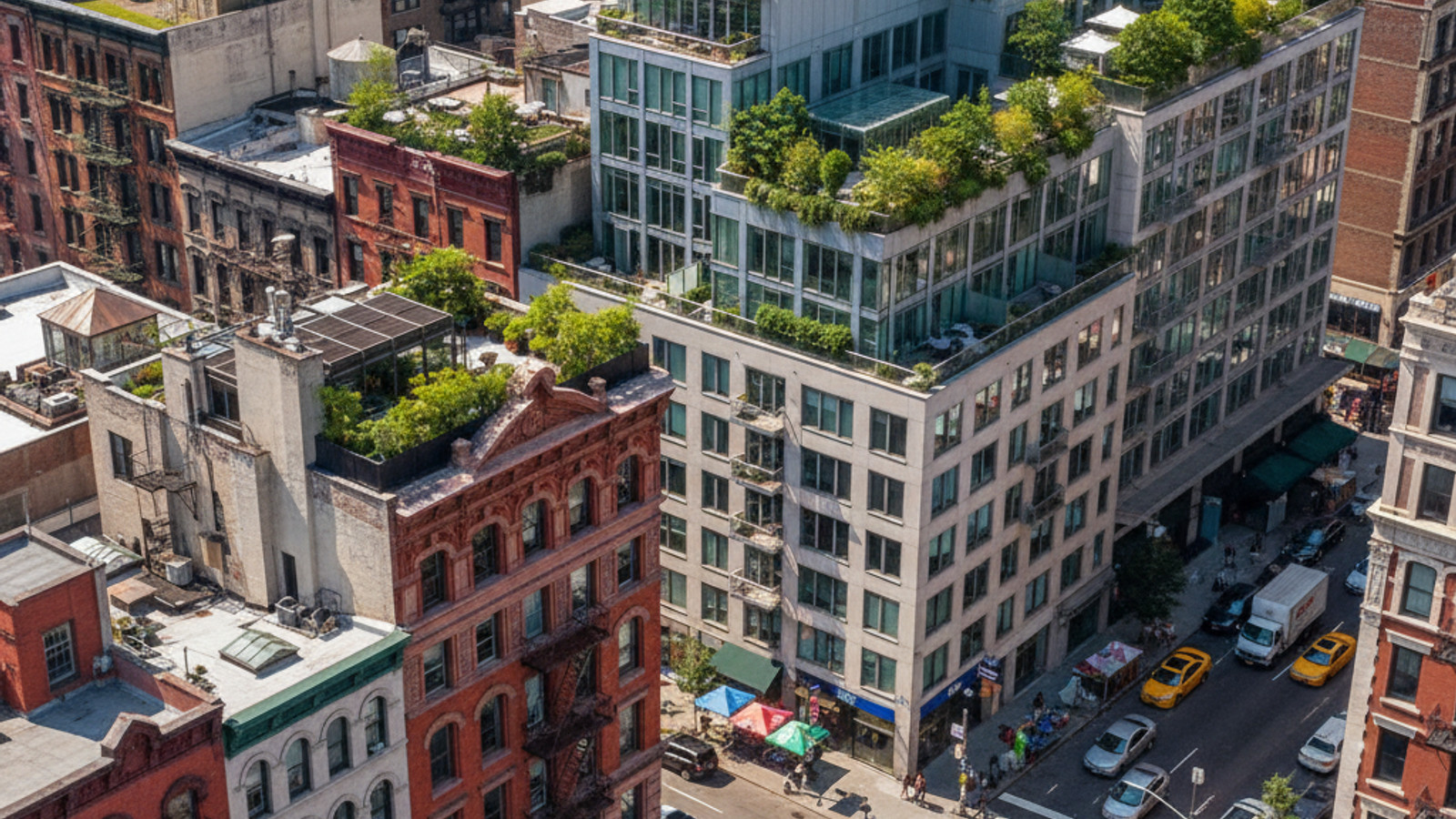
The Lower East Side features a highly diverse housing inventory, ranging from pre-war tenement buildings to ultra-modern glass towers. Because commissions are tied directly to the sale price, looking at actual dollar amounts based on typical property values provides a much clearer picture of your expected costs.
Relying solely on percentages can obscure the real financial commitment required to close a transaction. Understanding how the property type and its corresponding price point dictate the final commission payout is crucial for budgeting effectively.
Condos and New Luxury Developments
The neighborhood has seen a steady rise in new luxury developments, bringing high-end amenities and premium pricing to the area. A typical modern condo in the Lower East Side commands an approximate median price of $1,300,000.
Applying the citywide average total commission of 5.69% to a $1,300,000 property results in a fee of roughly $73,970. These high-value transactions frequently involve premium brokerages that may have less flexible fee structures due to the extensive marketing required.
Co-ops and Historic Walk-Ups
Historic walk-ups and traditional cooperative apartments make up a significant portion of the local market, generally offering a more accessible entry price. Buyers are often drawn to these buildings for their classic charm and proximity to major transit lines like the F, M, J, and Z trains.
The median price for a co-op or walk-up apartment in the area sits around $800,000. For an $800,000 sale, a 5.69% total commission translates to an estimated $45,520 due at closing.
Multi-Family Units
Multi-family units and townhouses operate under a different set of expectations, as they are often treated as investment sales rather than standard residential purchases. These properties generally require specialized marketing and might involve commercial brokers who use scaled percentage splits based on the high transaction value.
A small multi-family building in the neighborhood might carry a baseline value of approximately $2,500,000. A standard 5% commission on a $2,500,000 investment property equates to a substantial $125,000 fee.
How Recent Industry Changes Impact New York City
The real estate industry has undergone significant transformations recently, driven by a national push for greater transparency in how broker fees are handled. These legal shifts have permanently altered the compensation landscape, ensuring that both buyers and sellers fully understand who is paying for representation.
The implementation of these new standards in August 2024 served as a historical turning point that established the current 2026 market dynamics. Buyers now carry more direct responsibility in negotiating agent fees, moving away from the era where buyer agent compensation was simply assumed.
Mandatory Written Agreements for Home Buyers
Under the current regulations, prospective buyers are required to sign a formal agency agreement before touring any properties. This document clearly outlines the specific services the agent will provide and dictates the exact compensation they will receive upon a successful purchase.
Because buyer compensation is no longer guaranteed through the multiple listing service, buyers must be proactive. They can choose to negotiate these fees directly with their agent or request that the seller provide concessions to cover the cost during the offer process.
REBNY Rules vs. National Association of Realtors
It is vital to understand the distinction between the national National Association of Realtors settlement and the local guidelines enforced by the Real Estate Board of New York. Many agents operating in Manhattan are members of REBNY rather than NAR, making the local board rules the paramount governing force for city transactions.
REBNY specifically decoupled buyer and seller agent fees, prohibiting the listing broker from making direct offers of compensation to the buyer's agent. If sellers in New York City choose to offer compensation to the buyer's side, they must now pay the buyer's agent directly from the proceeds.
Frequently Asked Questions
Will a realtor accept a 2% commission in the Lower East Side?
Yes, some agents will accept a 2% commission for the listing side of the transaction, especially if the property is highly desirable and priced to sell quickly. However, sellers should clarify if this 2% covers only the listing agent or if it is part of a discount brokerage model.
Who pays the closing costs on a co-op in New York?
Both buyers and sellers share the burden of closing costs on a New York City cooperative apartment. The seller typically pays the broker commissions and the New York State transfer tax, while the buyer handles attorney fees, board application fees, and any mansion tax if the property exceeds $1,000,000.
Is 3% normal for a buyer's agent in Manhattan?
A 3% fee for a buyer's agent was historically common, but the current average in Manhattan is closer to 2.76%. With recent regulatory changes, buyers can now negotiate this percentage directly with their representative before signing an agency agreement.
Are real estate agent fees tax-deductible in New York?
Yes, sellers can deduct real estate agent commissions from their capital gains taxes when selling a property. These fees are subtracted from the final sale price, which effectively lowers the taxable profit on the transaction.