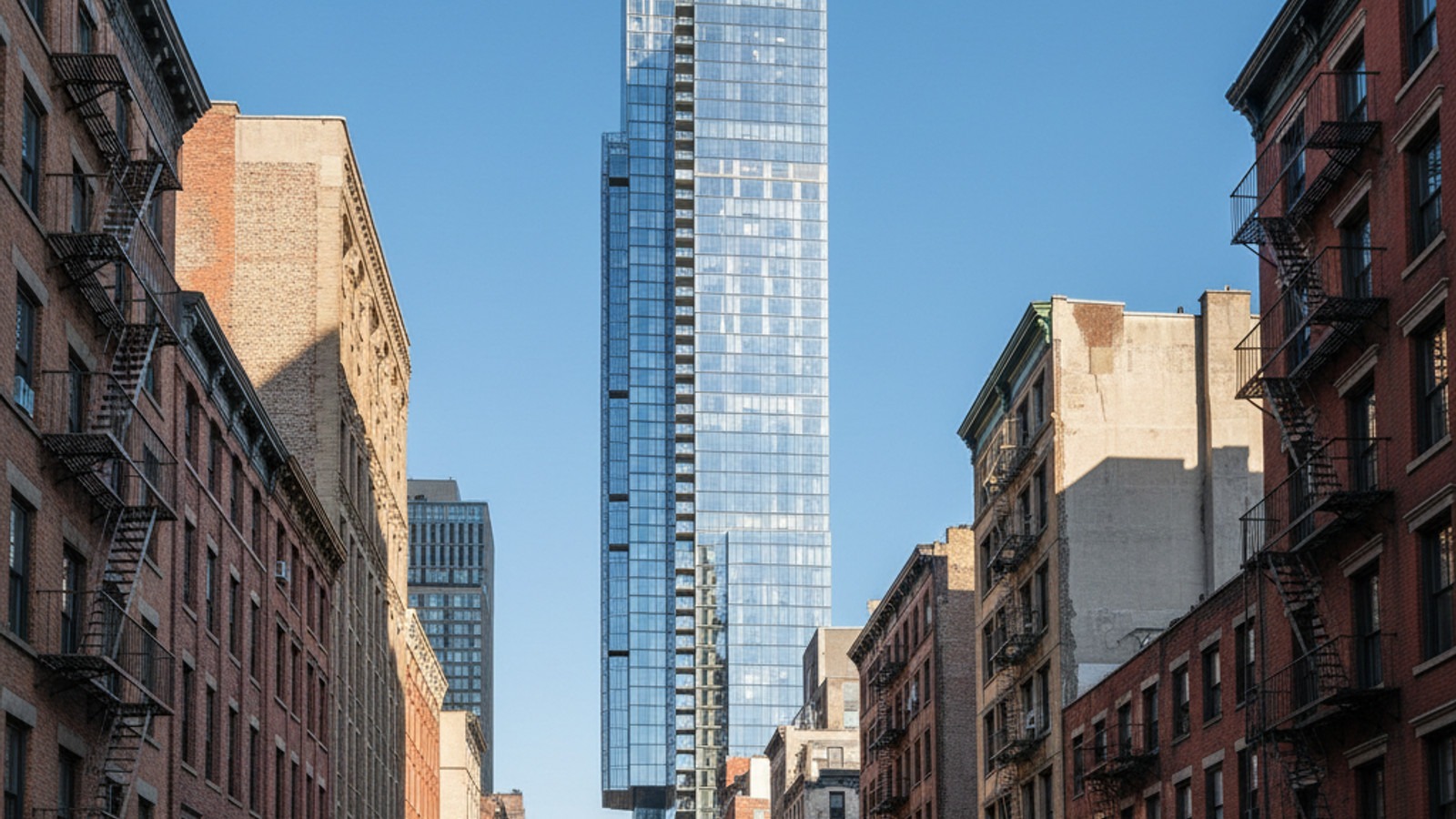
If you haven’t walked through the Lower East Side (LES) lately, you might not recognize the skyline. For decades, this neighborhood was defined by its history—walk-up tenements, immigrant roots, and a streetscape that felt distinctly "old New York." But today, if you look up, you’ll see a very different story being written in glass and steel.
The LES has evolved from a primarily rental-heavy, nightlife-centric district into a serious destination for luxury homeownership. We are seeing a fascinating contrast where gritty, historic streets meet ultra-modern vertical living. The primary draw here remains the energy—the walkability, the world-class dining, and the proximity to the East River—but the housing stock has leveled up significantly.
As we move through 2026, the market context is important to note. We are seeing a slightly "cooler" market compared to the post-pandemic frenzy. This is actually good news for you; sellers are becoming more realistic, and there are genuine opportunities to negotiate, especially in new developments that have been on the market for a few quarters.
In this guide, we’re going to skip the co-ops and pre-war walk-ups and focus strictly on market-rate new construction condos. Whether you are looking for a pied-à-terre or a primary residence, here is the landscape of new homes in the Lower East Side.
Major Master-Planned Communities & High-Rises
When we talk about "luxury" in the LES, we usually start with the buildings that changed the skyline. These aren't just condos; they are full-service ecosystems designed to offer resort-style living in a neighborhood that historically didn't have much amenity space.
One Manhattan Square (252 South St)
You literally cannot miss this building. Developed by Extell (the same team behind Billionaires’ Row), this 800-foot glass giant sits right on the waterfront. If you are looking for amenities, this is the heavyweight champion of the neighborhood. We are talking about 100,000 square feet of indoor and outdoor space, including private gardens, a spa, and sports facilities.
For buyers, the financial structure here is a major talking point. One Manhattan Square comes with a 20-year tax abatement that runs until 2039. In a city where carrying costs can be a dealbreaker, that abatement saves homeowners thousands per month.
Pricing: 1-bedrooms generally start around $1.1M, with larger residences climbing to $6M+.
Value: The price per square foot averages around $2,100, which is competitive given the water views and low taxes.
Essex Crossing (208 Broome / 242 Broome)
If One Manhattan Square is the vertical giant, Essex Crossing is the "city within a city." This master-planned development spans several blocks and integrates residential living with massive local convenience. Living at 208 Broome or 242 Broome means you have a Trader Joe’s, a Target, and the historic Essex Market essentially downstairs.
Note for 2026 buyers: You might see older marketing materials mentioning the "Market Line," the underground food hall. It’s important to know that the Market Line closed in 2024. However, the ground-floor Essex Market is still very much active and thriving, so your access to fresh produce and gourmet vendors hasn't changed.
Boutique & Design-Forward Developments
Not everyone wants to live in a mega-tower with hundreds of neighbors. If you prefer privacy and architectural flair over resort-style scale, the LES has seen a wave of "boutique" condos that prioritize design.
208 Delancey
This building is a favorite for architecture buffs. Designed by ODA Architecture, it features a distinctive curved facade that stands out against the boxier buildings nearby. The focus here is heavily on indoor-outdoor flow; many units feature rounded balconies that mimic the building's exterior curves. It feels modern but organic.
Pricing: Inventory ranges from roughly $650K for smaller units up to $2.6M for premium residences.
222 East Broadway
This development is unique because it blends the old and the new. It combines a renovated landmark loft building (The Lofts) with a brand-new adjacent tower. It’s a great option if you are torn between wanting "pre-war charm" and "modern reliability." A rare feature here is the private park—green space is a luxury commodity in the LES, and having a dedicated outdoor sanctuary is a huge value driver.
66 Clinton
If you want true exclusivity, 66 Clinton is as boutique as it gets. With only 12 residences, this building offers a quiet, sanctuary-like vibe. It’s tucked near some of the best dining in the city, offering a retreat from the noise while keeping you seconds away from the action.
Coming Soon: The 2026 Pipeline
If you are looking at what is coming down the pike, the pipeline is tighter than in previous years. We aren't seeing as many massive mega-projects; instead, developers are focusing on "infill" projects—smaller buildings that slot into the existing streetscape.
4 Freeman Alley: This is a project to watch. Tucked away in the famous Freeman Alley (known for its street art and hidden restaurant), this boutique project is slated for move-ins toward late 2025. It will likely appeal to buyers who want that "hidden gem" location.
290 Henry Street: Currently in the planning and rendering phase, this will add more inventory to the quieter, southern residential pocket of the neighborhood.
Nearby Context: While technically in the East Village, the Village Garden Condominium at 183 Avenue B is drawing interest from the same buyer pool looking at the northern edge of the LES.
A quick note on construction you might see: You may spot construction at 270 East 2nd St (Freedom Village). It is worth clarifying that this is a supportive housing development, not a luxury condo project. It’s an important part of the community fabric, but distinct from the private sales market.
Market Analysis: LES vs. Upper East Side New Developments
I often have clients who are cross-shopping new homes for sale in the Lower East Side against new construction on the Upper East Side (UES). On paper, the prices can look similar, but the lifestyle value proposition is totally different.
Here is how the numbers and vibes stack up:
Price Per Sq Ft: You might expect the LES to be cheaper, but high-end new developments here often trade between $1,800 and $2,200+ per sq ft. This is surprisingly competitive with UES new construction. The "discount" for being downtown has largely evaporated for premium buildings.
Inventory & Incentives: The LES currently has an edge on tax incentives. Buildings like One Manhattan Square offer abatements that are increasingly rare in new UES projects.
The Vibe: This is the deciding factor. The UES offers quiet streets, proximity to museums, and a traditional neighborhood feel. The LES is about art, grit, nightlife, and energy.
Buyer Profile: The LES tends to attract younger professionals, creatives, and investors looking for growth.
Frequently Asked Questions
Is it expensive to live in the Lower East Side now?
Yes, but the market is bifurcated. While rent-stabilized tenements remain affordable for long-term residents, the entry price for new construction condos is firmly in the luxury tier. You should expect starting prices for one-bedrooms in new buildings to hover around $1M to $1.2M.
What are the main new buildings in the Lower East Side?
The market is anchored by One Manhattan Square (for views and amenities) and Essex Crossing (for convenience). For a smaller, more architectural feel, 208 Delancey and 222 East Broadway are the primary boutique options currently selling.
Does the Lower East Side have good waterfront access?
Absolutely. The neighborhood runs along the East River, offering access to the renovated piers and East River Park. While the park is undergoing a massive resiliency project, the finished portions and the esplanade offer some of the best running and biking paths in Manhattan.
Are there tax abatements available in Lower East Side condos?
Yes, and this is a key differentiator. One Manhattan Square is the most notable example, offering a tax abatement that lasts until 2039. This can significantly lower your monthly carrying costs compared to similar buildings in neighborhoods like Chelsea or Tribeca.