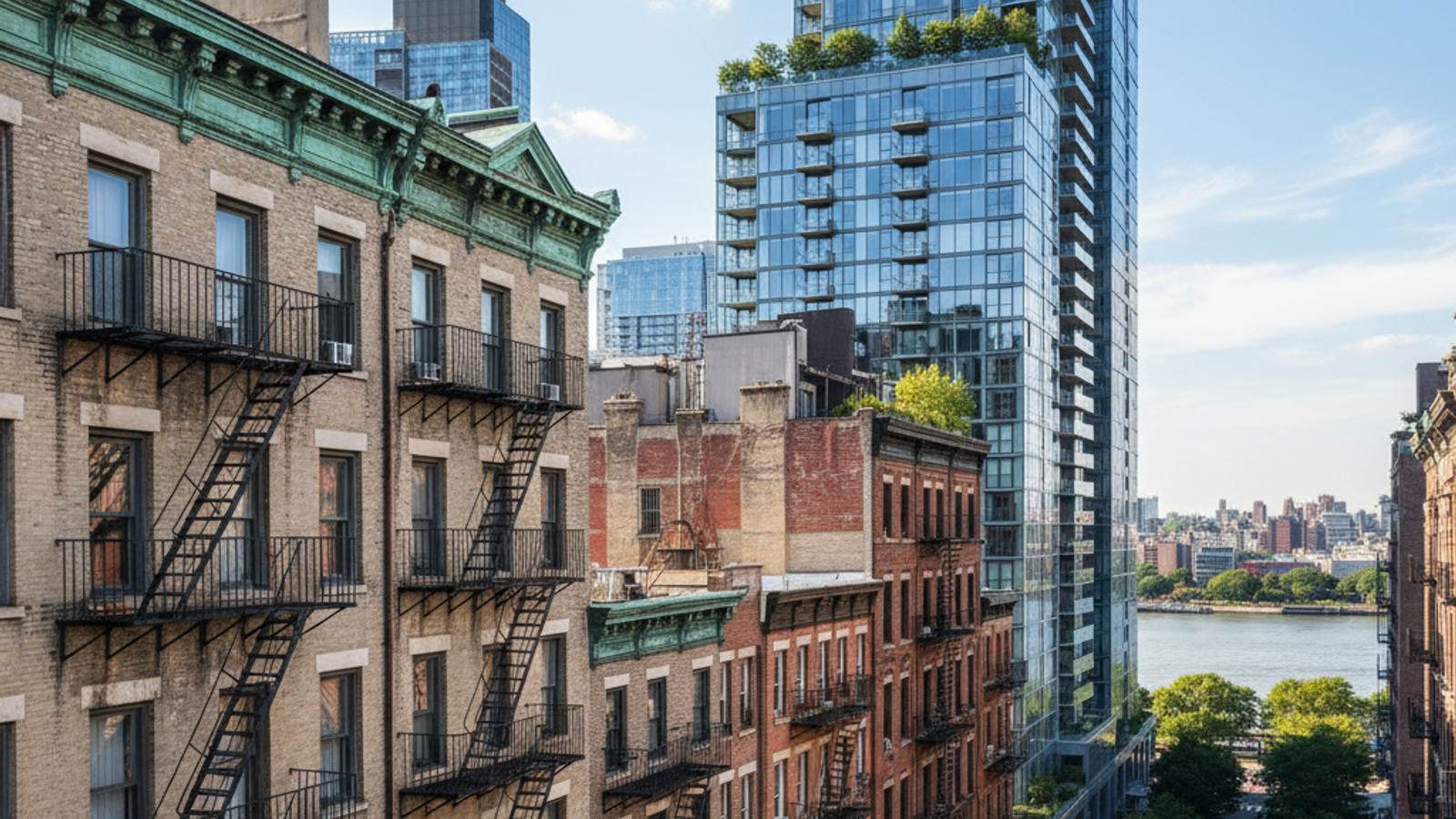
The Lower East Side sits on the southeastern edge of Manhattan, bordered by the East River, Chinatown, and the East Village. If you are Moving to Lower East Side, NY, you will find a neighborhood that blends a deep immigrant history with modern real estate developments. The area mixes pre-war architecture with brand-new residential towers.
Relocating here means choosing a dense, active environment over quiet residential streets. You will find historic walk-up apartments standing right next to modern construction. Buyers and renters looking at this market have distinct options depending on their budget and space requirements.
Median Rent and Home Purchase Prices
Housing costs in this part of Manhattan reflect its high demand and central location. Median rent for an apartment ranges from $4,150 to $5,995 per month, depending on the building's age and the unit's square footage. Renters looking for more space often look toward the older housing inventory.
Buyers looking to purchase a home will see a median price between $965,000 and $1,050,000 as of 2026. These numbers make the area slightly more accessible than Tribeca, though prices remain comparable to the neighboring East Village. Property taxes and monthly maintenance fees will add to these baseline costs.
Housing Options and Building Styles
The residential streets are famous for their historic pre-war architecture. Many of these older buildings are former tenements featuring classic fire escapes and walk-up access. These units often feature exposed brick and unique floor plans.
Newer construction offers a sharp contrast along the waterfront and major avenues. Buyers will find a large concentration of co-op buildings, particularly near the East River, alongside modern luxury towers. These newer developments typically include fitness centers, doormen, and updated amenities.
Subway Access and Commute Times
Most residents rely on the Delancey/Essex Street station and the East Broadway station for daily transit. These stops provide access to the F, M, J, and Z trains. The neighborhood is dense and walkable, but getting to other boroughs often requires a subway ride or a trip across the Williamsburg Bridge.
When Moving to Lower East Side, NY, professionals should note that travel times vary based on your office location. Commuting to major employment hubs is generally straightforward.
Financial District: Commuters can reach downtown Manhattan in 10 to 15 minutes via the F train or a quick bike ride.
Midtown Manhattan: Riding the subway north takes about 20 to 30 minutes depending on train traffic.
Brooklyn: The J, M, and Z trains provide direct access across the river into Williamsburg and northern Brooklyn.
Parks, Groceries, and Local Amenities
Daily errands are easy to manage with a large concentration of supermarkets, bodegas, and specialty food shops. The historic Essex Market serves as a primary grocery destination, housing dozens of individual vendors under one roof. Residents can also pick up essentials at independent pharmacies and corner stores along Orchard Street.
Outdoor space is concentrated along the waterfront and in smaller pocket parks. Seward Park offers basketball courts and sitting areas right in the center of the neighborhood. East River Park provides running paths, sports fields, and open green space directly along the water.
Healthcare access is straightforward, with several urgent care centers and local clinics spread throughout the major avenues. Residents also have their pick of boutique fitness centers and famous local food institutions like Katz’s Delicatessen. The area provides a self-contained ecosystem for daily living.
Frequently Asked Questions
How much is rent in the Lower East Side?
Expect to pay around $4,150 for a standard one-bedroom, with larger units pushing closer to $5,995. Landlords often require an annual income of 40 times the monthly rent to qualify. Units closer to the Delancey Street subway station tend to command a premium.
What subway lines go to the Lower East Side?
The F, M, J, and Z trains serve the area through the Delancey/Essex Street and East Broadway stations. If you work on the west side of Manhattan, you might need to transfer at West 4th Street. The B and D trains are also accessible just a short walk west into Chinatown.
What are the housing options in the neighborhood?
Renters and buyers will see a mix of pre-war tenement buildings and new luxury developments. Many older properties lack elevators, so you should factor in stairs when touring walk-ups. If you prefer modern amenities, focus your search on the newer towers along the East River.