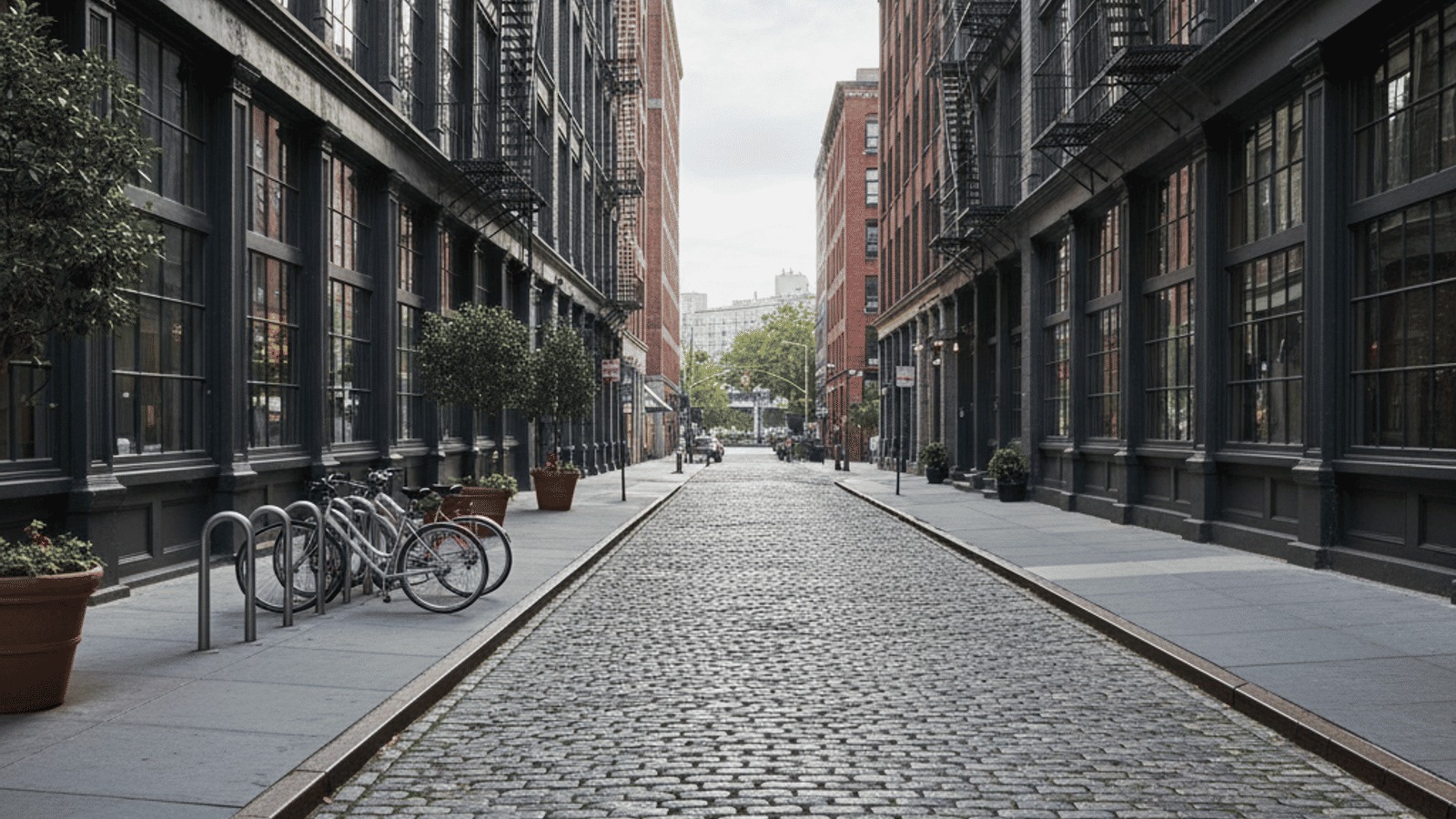
If you took a visitor and dropped them on a quiet, cobblestone corner in Tribeca, and then ten minutes later teleported them to a bustling intersection in the Lower East Side, they might have a hard time believing they are in the same city, let alone just a mile or so apart.
These two neighborhoods represent the starkest contrast you can find in downtown Manhattan. On the west side, you have Tribeca—polished, industrial-chic, and famous for its "quiet luxury." It is the land of converted warehouses and expansive lofts where the city’s most affluent residents retreat for privacy.
On the east side, you have the Lower East Side (LES). It is gritty, energetic, and steeped in history. This is where the immigrant story of New York began, and today it remains a cultural hub driven by nightlife, art, and a raw, "old world" charm that refuses to be sanitized.
Choosing between them usually isn't about budget alone—though that plays a huge role. It is about what kind of energy you want when you walk out your front door. Do you want the hushed, stroller-filled streets of a high-end enclave, or do you want to be in the thick of the action where the music plays late and the bagels are legendary? Let's break down how living in the Lower East Side compares to living in Tribeca looks from these two very different perspectives.
Vibe & Atmosphere: Electric Energy vs. Quiet Luxury
The biggest adjustment for buyers moving between these areas is the volume knob. Tribeca is famously one of the quietest neighborhoods in Manhattan. Because it was originally a manufacturing district, the zoning and street layout create low-density blocks that feel incredibly open and airy. At night, once the office workers from nearby financial hubs have gone home, the streets can feel almost suburban in their stillness.
You will see wide, cobblestone streets lined with massive cast-iron buildings. The vibe is understated wealth. It is not flashy in a "Times Square" way; it is confident and private. You are more likely to see residents walking their dogs or heading to a private spin class than stumbling out of a dive bar at 2 AM.
The Lower East Side flips that script entirely. It is high-density, loud, and visually chaotic in the best way possible. The streets here are lined with historic brick tenement buildings, many still featuring the original fire escapes that define New York’s cinematic look. Street art and graffiti are part of the aesthetic, not a sign of decay.
The energy in the LES is electric, especially after dark. This is a destination neighborhood for nightlife, meaning your Friday night walk home might involve weaving through crowds of gallery hoppers, skaters, and diners waiting for tables at the latest hot spot. It feels lived-in and authentic, but it rarely feels quiet.
Real Estate & Housing Costs
When we talk about real estate in these two zip codes, we are comparing two completely different types of inventory. Tribeca is the gold standard for "loft living." The housing stock here is defined by converted industrial warehouses. This means you get things that are incredibly rare in NYC: high ceilings, massive windows, and square footage that dwarfs almost anywhere else in the city.
Because of this, the price tag is heavy. Tribeca consistently ranks as one of the most expensive zip codes in the country. For prospective buyers, you should expect the median sales price to hover significantly north of $3M, and that often just gets you in the door. If you are looking at the rental market, a true one-bedroom apartment often starts around $6,100 per month and climbs rapidly depending on the building’s amenities, like doormen or gyms.
In contrast, for those moving to Lower East Side NY, the housing stock is historically defined by tenements—five or six-story walk-up buildings with no elevators. The apartments here have character, exposed brick, and history, but they are generally much smaller. You are paying for the location and the culture rather than a sprawling floor plan.
However, the LES isn't just old walk-ups anymore. Over the last decade, new developments like Essex Crossing have added glassy luxury towers to the mix, offering amenities that rival Uptown buildings. Prices here are more accessible than Tribeca but still high by national standards. You might see median sales prices around the $1M mark for co-ops or smaller condos. For renters, a standard walk-up one-bedroom typically lands between $3,000 and $4,500, though luxury buildings will push that range much higher.
Cost of Living: Dining, Groceries, and Daily Expenses
Beyond the rent check, your daily "burn rate" varies significantly between these two neighborhoods. Tribeca caters to a demographic that expects convenience and high quality, and the local pricing reflects that.
Grocery shopping in Tribeca often revolves around Whole Foods or high-end boutique markets where imported cheeses and organic produce are the norm. Dining out follows a similar pattern. This neighborhood is home to a high concentration of Michelin-starred restaurants and upscale bistros. A casual Tuesday night dinner here can easily turn into a $150 bill. If you grab a cocktail at a hotel bar or lounge, expect to pay upwards of $20.
The Lower East Side offers a much broader spectrum of spending options therefore the cost of living is higher. Yes, you have trendy restaurants that charge top dollar, but you also have a massive selection of cheap eats, dollar-slice joints, and historic delis like Katz’s.
For groceries, residents here rely on the fantastic Essex Market, which mixes high-end vendors with affordable local staples, alongside Trader Joe’s and smaller neighborhood fruit stands. Nightlife is also more wallet-friendly if you know where to look. You can still find dive bars with happy hours in the $10 to $15 range, which is becoming a rarity in lower Manhattan.
Commute & Transportation
Your commute experience will depend heavily on where your office is located. Tribeca sits on the west side of Manhattan, making it a dream for anyone working in the Financial District (FiDi) or Midtown West. You have excellent access to the 1, 2, and 3 trains, as well as the A, C, and E lines. If you work at the World Trade Center or Goldman Sachs, you can likely walk to work in under 15 minutes.
The Lower East Side covers the eastern flank. It is served principally by the F, J, M, and Z trains. This makes getting to Midtown East, Brooklyn, or SoHo relatively easy. However, the further east you go—towards the East River—the further you get from the subway. There are pockets of the LES often called "transit deserts" where you might have a 15-minute walk just to reach the station.
In terms of car ownership, both neighborhoods present challenges, but for different reasons. Street parking is notoriously difficult in both areas due to regulations and density. However, Tribeca has a higher concentration of parking garages, though they come with a premium monthly price tag. In the LES, garages are fewer and farther between, so most residents rely entirely on public transit or rideshares.
If we look at a typical commute to Midtown, both neighborhoods generally offer a 20 to 25-minute door-to-door trip, but the ease of that trip depends entirely on whether your destination is on the east or west side of the avenues.
Parks & Amenities
For many buyers, access to green space is the tie-breaker. Tribeca has a distinct advantage here with its direct access to Hudson River Park. This is arguably the crown jewel of downtown waterfronts. It is incredibly manicured, featuring Pier 25 with its mini-golf, beach volleyball courts, and playgrounds. It is perfect for runners, cyclists, and anyone who wants a "resort" feel right in the city.
The Lower East Side borders the East River, which offers a different experience. East River Park has historically been the main lung of the neighborhood, with ball fields, tracks, and an esplanade. However, it is important to note that this area is currently undergoing massive, multi-year construction projects for coastal resiliency. The park experience here is more concrete and urban compared to the landscaped lawns of the west side.
When it comes to fitness amenities, Tribeca again leans toward luxury. You will find high-end chains like Equinox and celebrity-favored studios like Tracy Anderson. The LES has a scrappier, more diverse fitness scene, ranging from gritty boxing gyms and yoga studios to boutique cycling spots that cater to a younger crowd.
Safety, Schools & Community
Perception of safety is often subjective, but the statistics and general feel differ between the two. Tribeca (covered by the 1st Precinct) is statistically one of the safest neighborhoods in NYC. The streets are well-lit, quiet, and generally free of the late-night rowdiness found elsewhere. It attracts high-profile residents specifically for this sense of privacy and security.
The Lower East Side (7th Precinct) is generally safe for a major city neighborhood, but it is busier and grittier. Because of the high density of bars and nightlife venues, there is simply more foot traffic, more noise, and more petty crime incidents compared to the sleepy streets of Tribeca. Residents here accept a certain level of urban noise and interaction as part of the trade-off for the vibrant culture.
As far as education goes, both of these communities have access to the public school system. They just differ in environment. Tribeca contains the PS 234 school. This is a well-known school that makes a perfect addition for the community that it serves. The LES school community contains many educational choices. Ranging from programs for the gifted and talented students in the NEST+m.
The community feel in Tribeca is private. Neighbors might nod to each other in the lobby, but it is not necessarily a "block party" culture. The LES, by contrast, has deep roots. There is a strong sense of neighborhood pride, activism, and artistic collaboration that makes it feel like a small village within the big city.
Pros and Cons: The Verdict
If you are still weighing the options, here is a quick way to balance the scales.
Tribeca Pros:
• Incredible loft spaces with square footage you can't find elsewhere.
• Quiet, low-traffic streets that offer a break from city chaos.
• Premier access to the Hudson River waterfront.
• A strong sense of privacy and prestige.
Tribeca Cons:
• Cost of entry is extremely high for both sales and rentals.
• Can feel a bit too sleepy or sterile at night if you crave energy.
• Everyday amenities like groceries and dining come with a "luxury tax."
Lower East Side Pros:
• Unbeatable food scene, ranging from cheap dumplings to up-scale fusion.
• Vibrant, Authentic Culture & Nightlife – Truly New York.
• More affordable price points for apartment dwellers and aspiring homebuyers.
• The area has excellent connectivity to Brooklyn and the creative center of the city.
Lower East Side Cons:
• Noise pollution may be a problem, particularly on weekends.
• The housing stock is a little older, with walk-up buildings and a correspondingly smaller land footprint.
• In some areas, it is quite distant to reach the subway. Consequently, travelling to school takes longer
• Grit is not for all; too often the street pattern can appear cluttered.
FAQs
Is Tribeca more expensive than the Lower East Side?
Yes, Tribeca is definitely pricier. Property prices in Tribeca are very expensive in the country. They include median sales of over $3 million. In comparison to this, prices on the Lower East Side are available in the same range of $1 million. Additionally, rents are lower on the Lower East Side.
Which neighborhood has better nightlife, LES or Tribeca?
If you want energy, clubbing, and late-night bars, the Lower East Side is the clear winner. Tribeca’s nightlife is much more subdued, focusing on fine dining, hotel lounges, and quiet cocktail bars rather than the high-energy venues found in the LES.
Is the Lower East Side safe at night?
The Lower East Side is generally safe, but it is a high-traffic nightlife district. This means you will encounter crowds, noise, and the typical unpredictability of a busy city entertainment zone late at night, whereas Tribeca remains quiet and empty.
How long is the commute from Tribeca to Midtown?
From Tribeca, the commute to Midtown West (via the 1, 2, or 3 trains) is very fast, typically around 20 minutes. If you need to get to the east side of Midtown, it may take slightly longer or require a transfer, but the access is generally excellent for business professionals.