If you look at a map, the Lower East Side (LES) and SoHo sit right next to each other, separated only by a few streets. But if you actually stand on those streets, the difference is night and day. Crossing from one to the other feels like walking between two entirely different worlds—one built on grit and artistic history, the other on architectural grandeur and high-end fashion.
When I’m helping clients decide between these two iconic downtown neighbors, it usually comes down to personality as much as budget. While SoHo offers polished, cast-iron luxury and incredible convenience, the LES offers a vibrant, late-night culture that feels a bit more "real." Let’s break down the trade-offs so you can figure out which set of keys belongs in your pocket.
The Vibe: Gritty Cool vs. Polished Luxury
Diversity in the Lower East Side comes from its historical roots as an immigrant entry point. This historical background provides the "bohemian vibe” which has grown into a young, vibrant, and fast-paced playground. One will experience its unrefined feel, which many New Yorkers adore. This comes with taking in views of the Tenement Museum, classic fabric stores, and then art galleries one after the other, with an aroma reminiscent of food carts, among others.
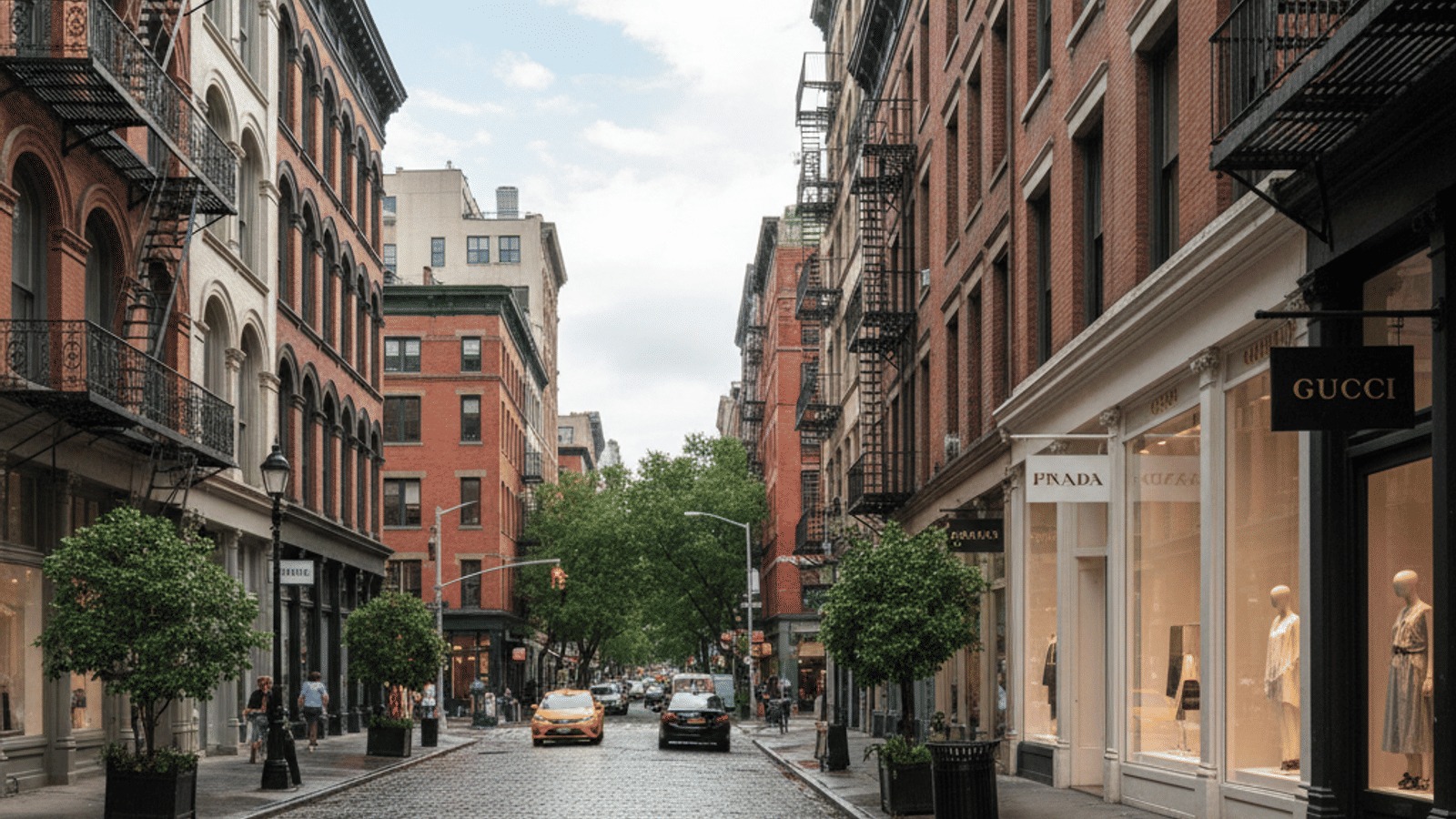
SoHo: This area is renown for its gigantic cast-iron lofts and cobblestone streets. Its sidewalks are very open and spacious. During the daytime, they are crowded with people taking in all the sights. They are filled with tourists and people toting designer handbags. Inevitably, it resembles an outdoor shopping mall. Later on in the evening when the stores close, it becomes relatively quiet compared to its next-door competitor.
As far as who lives where, the demographics change along with the vibe. The LES tends to attract younger professionals, creatives, and people looking to be in the thick of it, while SoHo attracts more established professionals, celebrities, and buyers looking for privacy and status.
Real Estate & Housing Stock: Tenements vs. Lofts
The biggest physical difference you’ll notice when touring these areas is the buildings themselves. If you are moving to Lower East Side NY and looking for apartments for rent, you are mostly going to encounter pre-war walk-up tenements. These units often boast "historic charm"—which is often broker-speak for original exposed brick—but they can also be tight on space and frequently lack modern amenities like elevators or in-building laundry. While glossy glass high-rises are beginning to punctuate the skyline, the classic walk-up remains the standard for those making the move to this neighborhood.
SoHo, by contrast, is almost entirely defined by the "loft." These are converted commercial spaces characterized by massive windows, soaring ceilings, and sprawling floor plans. Many of these buildings are equipped with elevators and heavy-duty freight lifts. While the LES forces you to be creative with every square inch of your floor plan, SoHo gives you room to breathe—though you certainly pay a premium for that volume.
Ultimately, your choice comes down to a trade-off between space and character. Luxury condos in SoHo offer a sense of grandeur and square footage that is hard to find anywhere else in Manhattan. The LES offers a cozy, authentic neighborhood feel, but you have to be comfortable with tighter quarters and a few flights of stairs.
Cost of Living: Rent and Home Prices
Let’s be real: neither of these neighborhoods is "cheap." However, SoHo is consistently one of the most expensive zip codes in the country. You are paying a premium for the prestige, the central location, and those massive loft layouts.
The Lower East Side cost of living is expensive by national standards, but it offers more "entry-level" Manhattan prices, specifically because there is so much inventory in older walk-up buildings. If you are budget-conscious but determined to live downtown, the LES is usually the more accessible option.
Here is how the numbers generally shake out right now:
• LES Rental Estimates: You can expect a median 1-bedroom to range roughly from $3,800 to $4,500.
• SoHo Rental Estimates: A similar setup in SoHo jumps significantly, often landing in the $5,500 to $7,000+ range.
• Buying in LES: Median sale prices sit roughly between $900,000 and $1.2 million, making it possible to find condos under that million-dollar mark.
• Buying in SoHo: The median sale price is much steeper, typically hovering in the $2.5 million to $3 million+ range for those classic lofts.
Your daily "coffee and lunch" budget will look different, too. SoHo dining and grocery options lean heavily toward high-end boutiques and upscale markets. The LES still has a fantastic mix of cheap eats—dollar slice shops and dumpling houses—sitting right next to trendy, upscale dining spots.
Dining, Nightlife, and Shopping
If you love going out, the Lower East Side is arguably the nightlife capital of Manhattan right now. It has an incredibly high density of dive bars, live music venues like the Mercury Lounge, and hidden speakeasies. On Friday and Saturday nights, the streets are packed with people hopping from bar to bar until 4 AM.
SoHo offers a completely different experience. It is a global shopping destination featuring flagships for Prada, Chanel, and Bloomingdale's. While living in the Lower East Side means browsing indie boutiques and vintage sneaker shops, living in SoHo means having the world’s biggest fashion brands as your downstairs neighbors.
For foodies, the battle is tough. SoHo is fantastic for power lunches, bottomless brunches, and upscale sit-down dinners. The LES is better for "food crawls"—think pastrami at Katz's Deli, bagels at Russ & Daughters, and exploring a massive variety of diverse, affordable cuisine.
Commute & Transportation Access
If your daily life involves commuting to Midtown or the Financial District, SoHo is tough to beat. It is extremely well-connected, sitting at a transit hub with access to the N, Q, R, W, B, D, F, M, 6, C, and E trains. You can get almost anywhere in the city without a transfer.
Connectivity in the Lower East Side is a bit more complicated. The neighborhood relies heavily on the F, M, J, and Z lines. If you live on the far eastern side of the neighborhood (closer to the East River), you might find yourself in a bit of a "transit desert," facing a 15-minute walk just to get to the subway station.
In terms of walkability, both neighborhoods score exceptionally high. For families considering a move to the area, the concentration of schools in Lower East Side NY makes it easy to navigate the morning drop-off on foot, as many residents live within a few blocks of their preferred campus. However, SoHo feels more central to other desirable neighborhoods like the West Village, Tribeca, and Nolita, whereas the LES is a bit more tucked away in its own corner of the island.
Safety, Noise, and Livability
This is often the deciding factor for my clients. The Lower East Side can be very, very noisy. Because of the bar scene, the streets are loud late into the night, especially on weekends. If you are a light sleeper, you need to be careful about which street your bedroom window faces.
SoHo has its own noise issues, but they are different. It is chaotic during the day due to the crush of tourists and shoppers, and the traffic on Canal and Broadway is relentless. However, the side streets tend to get much quieter at night once the stores close.
Regarding cleanliness, SoHo generally feels more manicured. The local Business Improvement District (BID) does a good job keeping the streets swept. The LES has a grittier aesthetic with more street art, overflowing trash cans, and older infrastructure. Both areas are generally safe and busy, but the LES can feel a bit "rougher" around the edges, whereas SoHo feels more curated.
Pros and Cons: LES vs. SoHo
Here is a quick snapshot to help you weigh your options:
• Lower East Side Pros: Vibrant nightlife, diverse food scene (high-end to cheap eats), rich history, and more affordable rental options compared to its neighbors.
• Lower East Side Cons: Loud late at night, smaller apartments (mostly walk-ups), and the commute can be a hike if you live far east.
• SoHo Pros: Stunning cast-iron architecture, spacious lofts, incredible world-class shopping, and unbeatable subway access.
• SoHo Cons: Extremely expensive cost of living, sidewalks crowded with tourists on weekends, and fewer "neighborhood" convenience stores.
FAQs
Which is more expensive, Lower East Side or SoHo?
SoHo is significantly more expensive. Whether you are renting or buying, you will pay a premium for the 10012 zip code, with median rents often $1,500 to $2,000 higher per month than in the Lower East Side.
Is the Lower East Side safe at night?
Yes, the Lower East Side is generally safe, largely due to the high volume of foot traffic at night from the restaurant and bar crowd. It has a grittier look than other parts of Manhattan, but the constant activity helps keep eyes on the street.
Is SoHo better for commuting than the Lower East Side?
Generally, yes. SoHo is one of the best-connected neighborhoods in NYC, with access to almost every major subway line (N, Q, R, 6, A, C, E), whereas the Lower East Side relies mostly on the F, J, M, and Z lines, which can be a further walk depending on your address.
Which neighborhood has better nightlife, LES or SoHo?
It depends on your style. If you prefer dive bars, live music venues, and a high-energy "party" atmosphere, the Lower East Side is the winner; if you prefer upscale cocktail lounges and sit-down dinners, SoHo is the better fit.