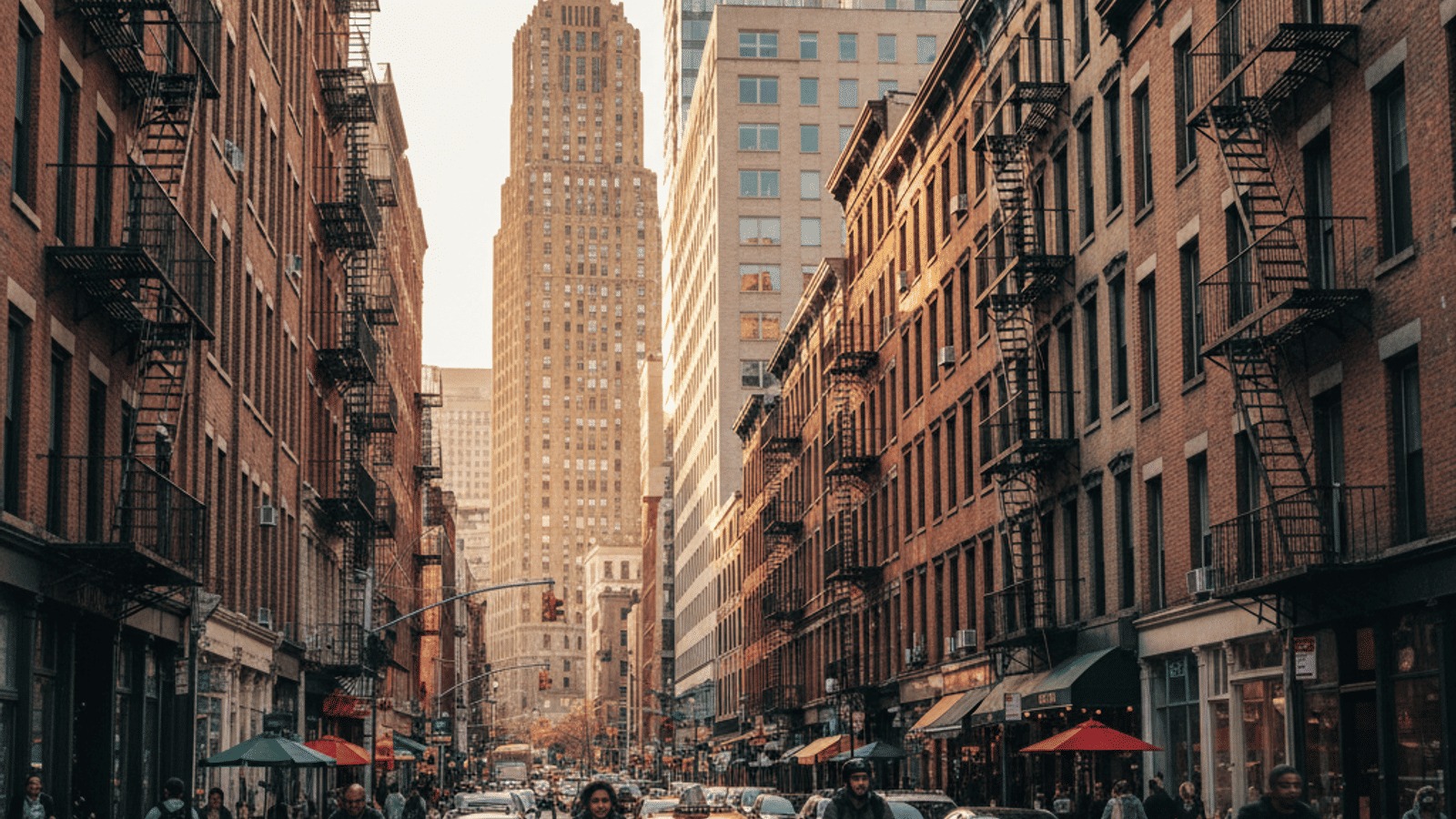
Neighborhood Fits You?
If you are looking to move downtown, you’ve likely narrowed your search to the heavy hitters south of Houston Street. Two of the most distinct options are the Lower East Side (LES) and Nolita. On a map, they sit right next to each other, but the day-to-day reality of living in them is roughly the difference between a late-night rock concert and a curated Sunday brunch.
The Lower East Side is a sprawling, historic neighborhood stretching from east of the Bowery all the way to the East River. It is known for its grit, high energy, and deep immigrant history. Nolita (North of Little Italy) is a much smaller, four-block-wide enclave bounded by Houston, Broome, Bowery, and Lafayette. While the LES feels expansive and raw, Nolita feels like a compact, European-style village tucked away in the middle of the chaos.
Deciding between living in the Lower East Side vs Nolita usually comes down to what you want to see when you walk out your front door: the bustling, artistic energy of a neighborhood that never sleeps, or the polished, tree-lined charm of one of Manhattan’s most exclusive pockets.
Vibe and Lifestyle: Gritty Cool vs. Curated Charm
The atmosphere in these two neighborhoods couldn't be more distinct. Understanding the vibe is usually the quickest way to figure out which one belongs on your shortlist.
The Lower East Side is renowned for its unfiltered artistic past and pure adrenaline-fueled fun. It is known to keep a strong “downtown cool” vibe that appeals to creative people and young professionals interested in partaking in the action. Just take a walk along either Ludlow or Orchard Street, and you will see a mix of old tenement buildings, dives, music clubs, and art galleries. It's a hotbed of noise and action with an edge to it that people in other cities can only enviously respect about the people in and around New York. However, there is a particular area known as “Hell Square” between Allen and Essex streets, and come the weekends, it turns pretty wild!
Nolita, on the other hand, seems very put together and trendy and like a village. The area’s sidewalks are pristine, and lined with upscale retailers and cafes where the patrons can be found sipping espresso at tables situated on the sidewalk. It all has an “Instagram-ready" look that seems very deliberately crafted. The LES seems like it's where you go for a party, whereas the area known as Nolita seems like it's where you go to be spotted, and it's in the very heart of the city.
Housing Options and Cost of Living
When you start looking at actual apartments, the differences in inventory and pricing become very clear. Nolita is geographically tiny, meaning inventory is scarce, whereas the LES covers a much larger area with a wider variety of building types.
In the Lower East Side, you will find a diverse mix of housing and the cost of living varies. This includes the classic, pre-war walk-up tenements—which can be charming but often small—sitting right next to new luxury high-rises like the towers at Essex Crossing. Because the neighborhood stretches so far east, you can often find better deals if you are willing to walk a few extra avenues to the subway.
Nolita housing is strictly low-rise. You won't find many doorman high-rises here. The market is dominated by renovated pre-war walk-ups and loft-style apartments. Because the neighborhood is so desirable and stock is so limited, Nolita commands a significant premium per square foot.
Here is how the monthly costs generally shake out for renters:
• LES 1-Bedroom Rent: You are typically looking at $3,200 – $4,800 a month. This varies wildly; a walk-up on the far east side will be at the bottom of that range, while a luxury unit with a view will be at the top.
• Nolita 1-Bedroom Rent: Expect to pay $3,800 – $5,500+ a month. You are paying for the location and the "chic" factor, often for less square footage than you’d get nearby.
• Buying Market: Nolita condos are rare and pricey. If you are looking to buy, the Lower East Side offers more co-op inventory and new development options.
Dining and Nightlife Scenes
Food and fun are usually the main reasons people move downtown, and both neighborhoods deliver, just in different ways.
The Lower East Side is arguably the city's playground. It is famous for speakeasies, live music venues, and late-night eats. Whether you are grabbing a pastrami sandwich at Katz’s Delicatessen, picking up lox at Russ & Daughters, or grabbing a slice of pizza at 2:00 AM, the food scene here is legendary and accessible. The nightlife draws crowds from all over the city and tourists looking to party, which gives the area a constantly buzzing, transient energy.
Nolita is the destination for brunch, wine bars, and upscale fast-casual dining. The focus here is on sit-down dining and sidewalk patios rather than clubs and dive bars. The crowd is less about late-night partying and more about low-key, fashionable socializing. You’ll find excellent Australian cafes, buzzy Thai spots, and intimate Italian restaurants that feel exclusive but welcoming.
Shopping and Cultural Attractions
Retail therapy looks very different depending on which side of the Bowery you are on.
Shopping in the LES is great for vintage hunters, streetwear enthusiasts, and those looking for indie designers. It feels like a treasure hunt. Culturally, the neighborhood is rich in history. You have the Tenement Museum, historic synagogues, and a gallery scene that rivals Chelsea. It feels deeply connected to the New York of the past.
Nolita is famous for curated boutiques, international brands, and jewelry shops. A walk down Elizabeth Street or Mott Street offers some of the best window shopping in Manhattan. Culturally, it has a strong visual arts presence, with famous street art murals and the beloved Elizabeth Street Garden serving as a backdrop for the neighborhood's daily life.
Commute and Public Transportation Access
If you need to commute to Midtown or the Financial District, your experience will depend heavily on exactly where your apartment is located.
Nolita is extremely well-connected. Because it sits centrally, you are within walking distance of the 6, B, D, F, M, R, and W lines at stations like Broadway-Lafayette, Prince St, and Spring St. You can get almost anywhere in Manhattan or Brooklyn without transferring. A commute to Midtown is usually a breeze, taking about 20 minutes.
The Lower East Side relies heavily on the F, J, M, and Z lines at the Delancey/Essex hub. While this is a great station, the "East River Factor" is real. The further east you live in the LES (closer to the river), the longer your walk to the subway. If you find a great deal on Avenue C or D, be prepared for a 15-minute walk just to get to the train, which can push commute times to Midtown into the 25–35 minute range.
Parks and Green Spaces
Access to outdoor space is a critical factor for many residents, especially in dense downtown areas.
The Lower East Side actually wins on total acreage. It offers larger parks like Sara D. Roosevelt Park, which has sports courts and fields. More importantly, living in the LES puts you close to the East River Park waterfront. This is a game-changer for runners and cyclists who want open paths and water views.
Nolita is very dense with limited green space. The Elizabeth Street Garden is a beloved community gem filled with sculptures and flowers, but it is small. There is also the DeSalvio Playground for recreation, but you won't find sprawling lawns here. Residents often walk over to the LES or Washington Square Park when they need more room to roam.
Safety, Noise, and Comfort
When comparing Lower East Side vs Nolita safety and comfort, noise is usually the biggest complaint residents have.
The Lower East Side is notoriously loud. If your apartment faces the street near a bar on Ludlow or Orchard, you will hear people late into the night, especially on weekends. While the area is generally safe, it is busy and gritty. You will encounter trash accumulation on the sidewalks due to the high volume of foot traffic and nightlife venues. There is also a larger homeless population near the parks.
Nolita tends to be quieter, especially on the side streets, though it still gets busy near Houston and Bowery. The neighborhood feels more manicured and the streets are typically cleaner than their neighbors to the east. It generally feels safer and more residential at night because it lacks the heavy concentration of dive bars and clubs that keep the LES awake.
Pros and Cons Summary
If you are trying to weigh the trade-offs, here is a quick look at the advantages and disadvantages of each area.
Lower East Side
If you are considering moving to Lower East Side NY, you’ll find a neighborhood that offers a high-octane lifestyle with plenty of perks, though it does come with certain compromises.
• Pros: Incredible dining and nightlife variety, slightly lower entry price for rentals compared to its western neighbors, direct access to the East River waterfront, and a rich historical character.
• Cons: It can be very loud and crowded, the streets can be dirty, and the walk to the subway is long if you live far east.
Nolita
• Pros: Unbeatable central location with excellent subway access, a charming and photogenic aesthetic, and high-end shopping right downstairs.
• Cons: It is very expensive, apartments are often small, and there are fewer standard amenities like large grocery stores.
Schools and Local Amenities
For daily conveniences, the new developments in the LES have changed the game. The massive Essex Crossing complex brought a movie theater, the Market Line, and a Trader Joe’s to the neighborhood. There is also a Target near Delancey. This makes grocery runs and errands much easier for LES residents.
Nolita relies more on smaller gourmet markets, specialty cheese shops, and bodegas. For a full grocery haul, residents usually walk to the Whole Foods on East Houston or head into SoHo.
regarding education, both areas are served by NYC District 1 and 2 schools, offering a range of public options. The proximity to NYU also means plenty of students live in both areas, though the price point in Nolita often skews the demographic slightly older than the student population because of the schools in the LES.
The Verdict: Should You Choose LES or Nolita?
Choosing between these two incredible neighborhoods ultimately comes down to your budget and your lifestyle speed.
You should choose the Lower East Side if you crave energy. If you want the city’s best nightlife at your doorstep, don't mind a bit of grit, and prioritize having a slightly larger budget for entertainment over a quiet street, this is your spot. It is ideal for those who want to feel the pulse of the city 24/7.
You should choose Nolita if you want a central, chic location and have a higher budget to support it. If your ideal Saturday involves a boutique fitness class followed by a glass of wine at a sidewalk table, Nolita offers that sophisticated village feel that is hard to find elsewhere in Manhattan.
FAQs
Is Nolita more expensive than the Lower East Side?
Yes, generally speaking, Nolita commands a higher price per square foot than the Lower East Side. While luxury high-rises in the LES can be pricey, the average entry-level rent for a pre-war apartment is significantly higher in Nolita due to its desirability and limited inventory.
Which neighborhood is safer, Lower East Side or Nolita?
Both neighborhoods are busy and generally safe for city living, but Nolita often feels safer and more manicured at night. The Lower East Side can feel grittier, especially late at night around nightlife hubs and parks, but it is heavily trafficked which adds a layer of safety in numbers.
Is the Lower East Side too loud for living?
It depends on the specific street, but the Lower East Side has a reputation for being one of the louder neighborhoods in Manhattan. If you live on a main drag like Ludlow, Orchard, or Delancey, noise from bars and traffic is constant; however, apartments facing the back or located on side streets further east can be surprisingly quiet.
Which area has better subway access?
Nolita definitely has the edge for subway access. It sits centrally near the Broadway-Lafayette and Spring Street hubs, giving you access to the 6, B, D, F, and M lines with very little walking, whereas many parts of the LES require a longer walk to the F/J/M/Z lines at Delancey Street.