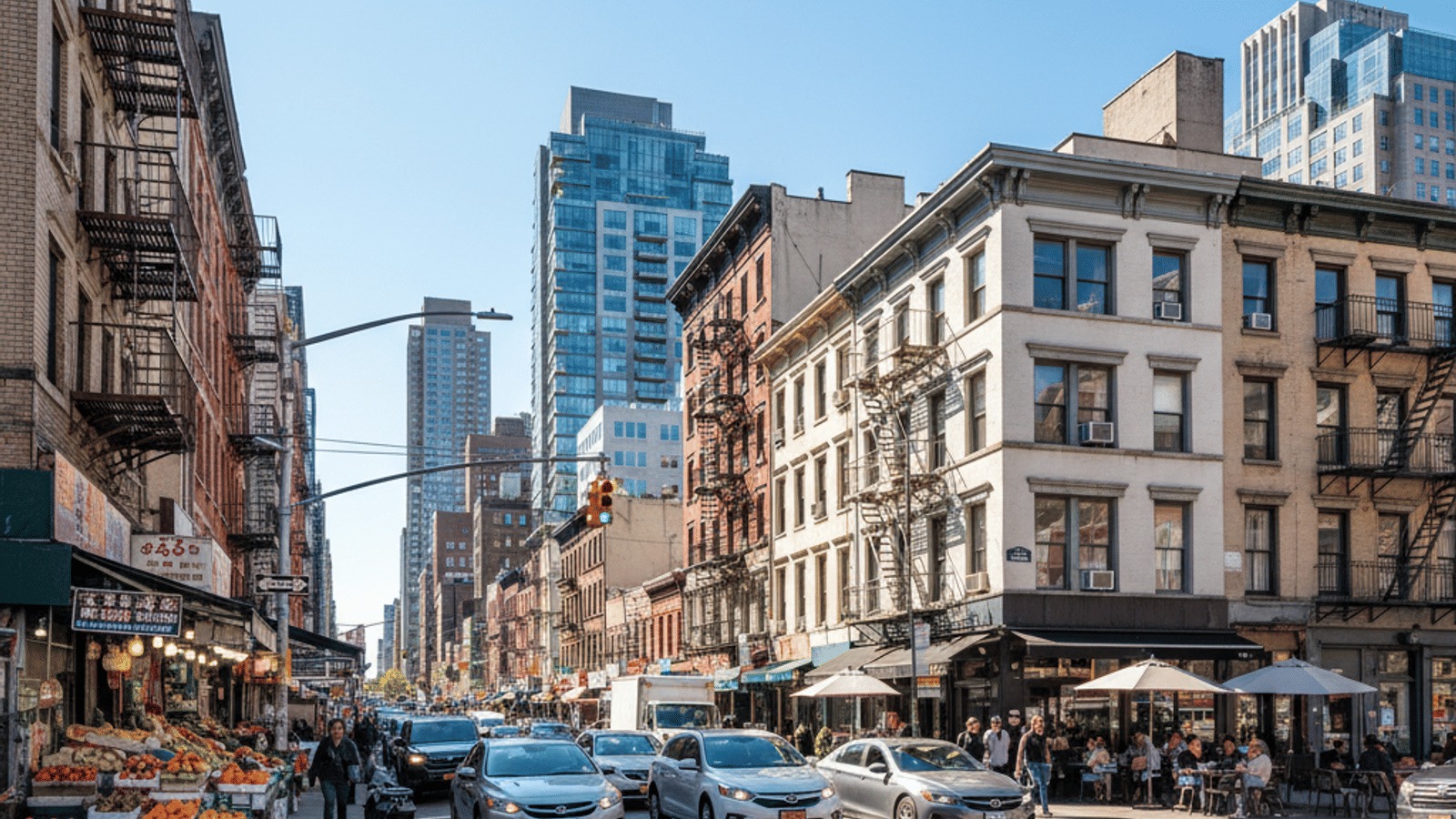
If you are looking to rent in downtown Manhattan, you’ve likely found yourself standing on a street corner, unsure if you’re in the Lower East Side (LES) or Chinatown. These two iconic neighborhoods don’t just border each other; they blur together in a way that feels distinctly New York. The boundary line—roughly Division Street or East Broadway—is incredibly porous. You might grab coffee in a trendy LES cafe and walk half a block to find yourself surrounded by fruit stands and fish markets.
Despite their shared history of immigrant tenacity and tenement housing, the living experiences here are vastly different. The Lower East Side has evolved into the city’s nightlife capital, a place defined by high energy, gritty glamour, and modern infill. Chinatown, conversely, remains the cultural and culinary heartbeat of downtown, resisting gentrification in a way few other neighborhoods have managed.
Choosing between them usually comes down to what you prioritize: do you want the trend-setting nightlife and modern amenities of living in the Lower East Side, or the cultural immersion, transit connectivity, and value that comes with living in Chinatown? Let's break down the numbers and the vibes.
Atmosphere and Vibe: Party Central vs. Frenetic Market Culture
The biggest difference between these neighbors is how the energy shifts from day to night. If you value a slow, quiet morning, the Lower East Side is generally your speed. It’s a neighborhood that stays up late and sleeps in. Mornings are relatively peaceful until the brunch crowds roll in, but once the sun goes down, the area explodes. It is gritty but gentrified, known for indie music venues, dive bars, and art galleries that draw crowds from all over the boroughs.
Chinatown offers a completely different sensory experience. It is bustling from the crack of dawn. Delivery trucks, fishmongers, and fruit stands create a high-energy, almost chaotic atmosphere during the day that some people find invigorating and others find overwhelming. However, the vibe flips in the evening. While the restaurants remain busy, the side streets of Chinatown tend to get much quieter than the LES after dark.
It is also worth noting the rise of "Dimes Square," a micro-neighborhood around Canal and Ludlow where these two vibes overlap. It’s a pocket that feels like a bit of both worlds—trendy and scene-y, yet situated right in the thick of the market district.
Housing Stock: Tenements, Walk-Ups, and Luxury Infill
When we look at the actual buildings, these two areas share a lot of DNA. Both neighborhoods are architecturally defined by pre-war, 5-story walk-up tenements. If you are renting a walk-up NYC apartment in either area, you should expect tight square footage, narrow hallways, and plenty of historic charm, like exposed brick and fire escapes.
However, the inventory lists are starting to diverge. The Lower East Side has seen aggressive development over the last decade. You have massive projects like Essex Crossing and plenty of high-end renovations where developers have gutted old buildings to add washers, dryers, and premium finishes. If you are looking for a doorman building or a roof deck, you have significantly more options here.
Chinatown’s inventory is predominantly older, no-frills walk-ups. Landlords here tend to hold onto properties for generations, meaning there is less turnover and fewer "luxury" renovations. High-end living does exist—mostly in waterfront outliers like One Manhattan Square—but for the most part, a standard Chinatown apartment is going to be older and simpler than its LES counterpart.
Cost of Living and Rental Prices
For many renters, the decision comes down to the monthly budget. Generally speaking, the Lower East Side commands a premium. You are paying for the "cool" factor, the proximity to nightlife, and the higher likelihood of updated appliances. Chinatown often offers better value per square foot, especially if you are willing to accept an unrenovated unit with a classic layout.
Here is how the rental costs typically shake out (estimates for 2026):
• LES cost of living average 1-Bed Rent: Approximately $3,800 – $5,200 per month.
• Chinatown Average 1-Bed Rent: Approximately $3,000 – $4,500 per month.
• Sales Market: LES median prices often hover above $975,000, whereas Chinatown data can skew lower due to low inventory turnover.
Beyond rent, your day-to-day spending looks different in each spot. Chinatown is famous for affordable living expenses. You can buy fresh produce, seafood, and essentials on the street for a fraction of what you’d pay at a chain grocery store. Dining out can also be incredibly cheap if you stick to dumpling houses and noodle shops.
In contrast, the cost of living in the Lower East Side reflects its gentrification. While there are cheap eats, you are largely surrounded by mixology bars, brunch spots, and higher-end grocery options like Union Market or the vendors inside Essex Market. You might also find that newer LES buildings offer "free months" concessions to attract tenants, whereas Chinatown landlords typically stick to traditional lease terms.
Food & Entertainment: Trendy Dining vs. Culinary Institutions
If you are a foodie, there is no losing choice here, but the scenes are distinct. The Lower East Side is a destination for experimental dining and social drinking. It’s where you go for a bottomless brunch, a reservation at a hot new bistro, or a show at a legendary venue like the Bowery Ballroom. The nightlife here is the primary draw, and the streets are packed with people bar-hopping on weekends.
Chinatown offers what is arguably the best value dining in NYC. It isn't about "scenes" or clubbing; it's about institutions. You have legendary spots like Nom Wah Tea Parlor for dim sum and endless holes-in-the-wall serving hand-pulled noodles. The nightlife in Chinatown is more subdued but very cool—think hidden speakeasies like Apotheke rather than loud dance floors.
Transportation and Commute
This is one category where Chinatown often claims the victory. Canal Street is a massive transportation hub. If you live near Canal, you have immediate access to the N, Q, R, W, 6, J, and Z trains. This makes commuting to Midtown, Wall Street, or Brooklyn incredibly efficient. You can get to Midtown in about 20 minutes from here.
The Lower East Side relies heavily on the F, J, M, and Z lines, specifically around the Delancey/Essex station. While this is convenient, the geography of the LES stretches far east toward the East River. If you find a great deal on an apartment on Avenue C or D, you are looking at a significant walk to the subway or a reliance on buses. That commute to Midtown from deep in the LES can easily take 25 to 30 minutes or more.
Both areas are highly walkable to nearby heavy hitters like SoHo, NoHo, and Tribeca, making them great base camps if you work downtown. Furthermore, for families and students, the accessibility of various schools in Lower East Side NY—such as the highly-rated NEST+m or PS 184 Shuang Wen—is a major factor, as many of these institutions are nestled within short walking distances of the main transit corridors, blending educational needs with urban mobility.
Safety, Noise, and Cleanliness
These are high-density, high-traffic neighborhoods, so "quiet" is a relative term. In the Lower East Side, the noise is largely human. Thursday through Saturday nights can be loud due to the bar crowds spilling onto the sidewalks. If your apartment faces the street near a popular venue, you will hear it.
Chinatown is noisy in a different way. The volume comes from commercial activity—traffic, market loading, and daytime crowds. However, once the shops close, many side streets get surprisingly quiet overnight.
Sanitation is a challenge for both neighborhoods. Narrow streets and high density mean trash bags pile up on sidewalks for collection. Chinatown has the added factor of fish markets, which contribute a very specific scent during hot summer days. Regarding safety, both areas are statistically safe but have a "gritty" feel. The LES deals with rowdy late-night drunk crowds, while Chinatown can feel a bit desolate on certain side streets after midnight.
The Verdict: Which Neighborhood Suits You?
Deciding between living in the Lower East Side vs Chinatown usually comes down to your lifestyle pacing and your daily priorities.
• Choose Lower East Side if: You want to be in the center of the action. If you are moving to Lower East Side NY, you should prioritize being near the city's best nightlife, desire access to modern luxury rentals or gut-renovated apartments, and don't mind paying a premium for the "cool" factor. This area is perfect for those who want their home base to be a trend-setting social hub.
• Choose Chinatown if: You value authentic culture and incredible food at a great price. This neighborhood is ideal if you prefer a shorter commute via the Canal Street hub and want a bustling, market-driven daytime vibe rather than a party-centric nightlife scene. It offers a sense of stability and community that is harder to find in more transient areas.
For those who can't quite decide, the "Two Bridges" area or the streets bordering East Broadway offer a fascinating mix of both worlds, serving as a perfect middle ground for your transition to downtown Manhattan.
FAQs
Is the Lower East Side more expensive than Chinatown?
Yes, generally speaking. While both neighborhoods have affordable older walk-ups, the Lower East Side has a higher concentration of luxury developments and renovated units that drive up the average rent. You can typically get more space for your money in Chinatown.
Which neighborhood has better subway access?
Chinatown usually wins on connectivity. The Canal Street station is a major hub serving the N, Q, R, W, 6, J, and Z lines, offering easy access to almost anywhere. The Lower East Side is served mainly by the F, J, M, and Z, and some parts of the neighborhood are a long walk from the train.
Is Chinatown safe at night compared to the Lower East Side?
Both neighborhoods are generally safe but feel different at night. The Lower East Side stays busy with crowds of people out at bars until very late, which provides "safety in numbers" but can be rowdy. Chinatown streets can become very empty and quiet after businesses close, which some residents find peaceful and others find isolating.
Can you find luxury apartments in Chinatown?
Yes, but they are much rarer than in the LES. While the Lower East Side has seen a boom in luxury high-rises and boutique condos, Chinatown’s housing stock is mostly historic walk-ups. However, newer developments like One Manhattan Square on the waterfront are introducing luxury amenities to the area.