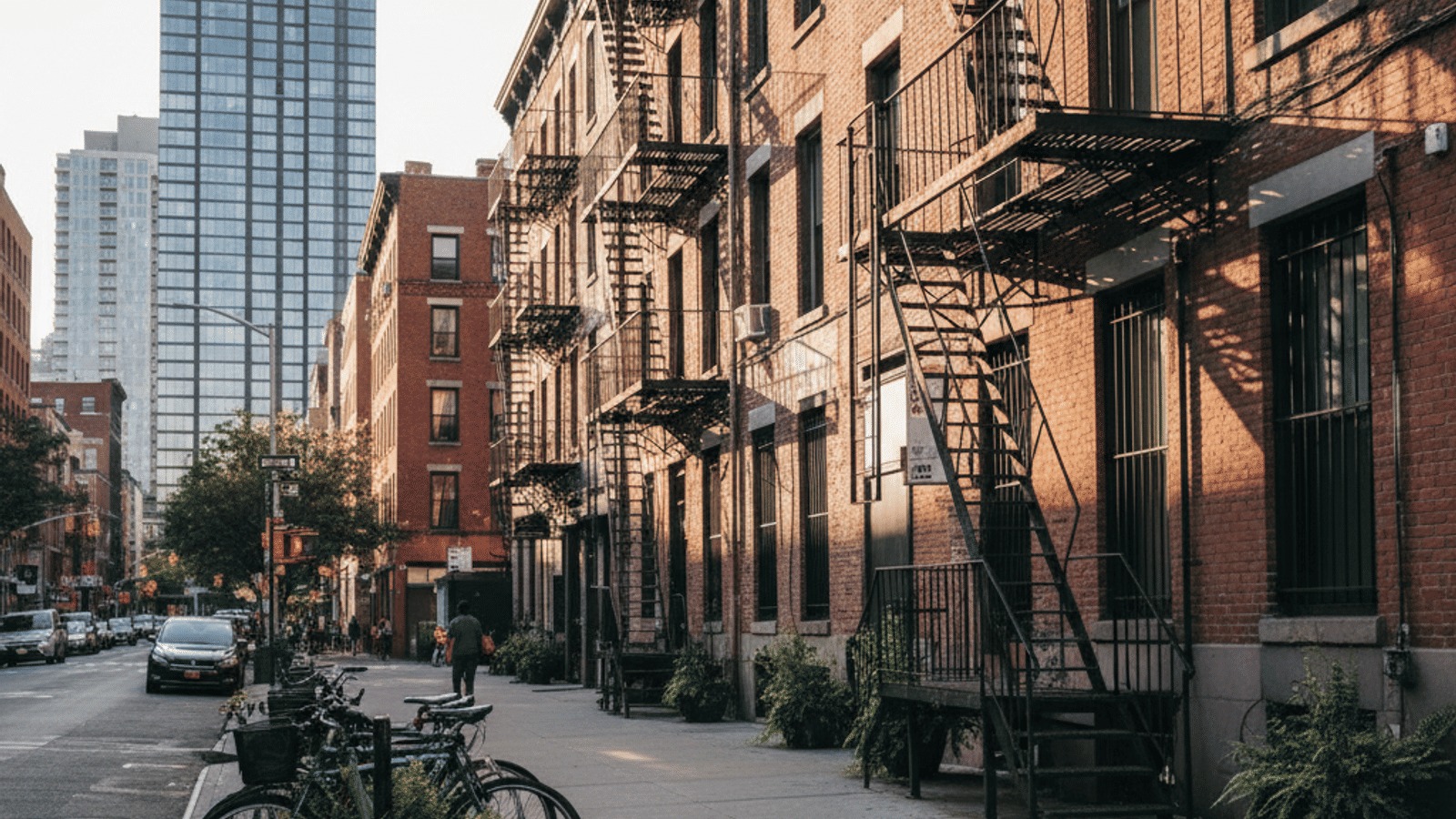
If you are looking for that classic, gritty, downtown Manhattan experience, you are likely torn between the Lower East Side (LES) and Alphabet City. To an outsider, they might look like the same neighborhood—lots of pre-war tenements, fire escapes, and incredible food. But if you talk to anyone living in the Lower East Side vs Alphabet City, they will tell you these are two very different worlds.
The easiest way to tell them apart is the map. Houston Street is your dividing line here. Everything south of Houston is the Lower East Side. Everything north of Houston (and east of 1st Avenue) is Alphabet City.
Here is the quick take before we dive deep: choose the LES if you want maximum convenience, subway access, and high-energy nightlife right outside your door. Choose Alphabet City if you want a true neighborhood feel, community gardens, and slightly better value for your square footage.
Vibe & Lifestyle: Gritty Glamour vs. Bohemian Enclave
While they sit right next to each other, the street energy shifts the moment you cross Houston Street.
The Lower East Side Vibe: The LES is fast-paced and unapologetically loud. If you walk down Orchard or Ludlow Street on a Friday, the sidewalks are packed. It has a specific "cool-kid" energy that mixes old-school grit with ultra-luxury hotels and galleries. You get that classic New York contrast of a grimy tenement building sitting right next to a gleaming glass hotel. Beyond the nightlife, the area is also home to a diverse array of schools in Lower East Side NY, ranging from highly-ranked options like NEST+m to historic community institutions that reflect the neighborhood's deep roots. It attracts a "scene" crowd and young professionals who work in FiDi or Midtown and want to blow off steam immediately after work.
The Alphabet City Vibe: Alphabet City feels like the bohemian cousin who refuses to sell out. The pace is noticeably slower here. The neighborhood living room is Tompkins Square Park, where you’ll see everything from jazz musicians to dog runs and farmers markets. There is a strong culture of community gardens here—green spaces tucked between buildings that residents actually take care of. It feels less like a destination for tourists and more like a residential enclave for NYU students, artists, and longtime locals who are protective of the area’s history.
Cost of Living: Rent and Housing Stock
When we look at the numbers, there is a clear difference in what you pay and what you get.
Rental Trends: Generally speaking, the Lower East Side commands higher rents. This is partly due to the convenience of the subway, but also because the LES has seen a wave of new luxury developments. You can find high-rise glass towers with doormen here, which pulls the average price up. Expect to see average 1-bedroom rents hovering around the $4,800–$5,800/mo mark, though those luxury builds skew the numbers higher.
Where the Value Is: Alphabet City is often the smart "value" play. The golden rule here is simple: "The further east you go, the quieter—and cheaper—the lease." As you move from Avenue A toward Avenue D, prices drop. You can often find more square footage for your money here compared to the LES cost of living. An average 1-bedroom usually lands in the $3,800–$4,600/mo range.
Housing Stock: Both neighborhoods are famous for their pre-war walk-up tenements. If you love exposed brick and fire escapes, you’ll be happy in either spot. However, Alphabet City has stricter height caps in many areas, which has preserved that low-rise, sunlight-filled feel. The LES is much more of a mix, with tall modern condos towering over older buildings.
Commuting & Transit: The Subway Factor
If there is one section you need to pay attention to, it’s this one. Transit access is the single biggest differentiator between these two areas.
Lower East Side (The Winner): If you hate walking to the train, the LES wins hands down. You have excellent access to the F, M, J, and Z trains at the Delancey/Essex hub, plus the B and D trains at Grand Street. You can get to Midtown, Brooklyn, or the Financial District in minutes. It is one of the most connected spots downtown.
Alphabet City (The Challenge): Locals sometimes call Alphabet City a "transit desert," and they aren't totally joking. Residents mostly rely on the L train at 1st Avenue, but once you live on Avenue C or D, that L train station is a solid 15 to 20-minute walk away. Many residents rely heavily on the M14A or M14D crosstown buses to get to Union Square. If you plan on living in Alphabet City, a Citibike membership isn't just a perk; it’s practically a requirement to close the gap to the subway.
Nightlife & Dining: Clubbing vs. Dive Bars
Both neighborhoods are incredible for going out, but the energy is different.
LES Destination (Nightlife): The Lower East Side is a destination. People travel from all over the city (and the world) to party here. You’ve got rooftop bars, loud clubs, speakeasies, and world-famous food staples like Katz's Delicatessen and the massive Essex Market. It is fun, but it can be overwhelming. On weekends, the streets can feel like one giant block party.
Alphabet City: (Local Haunts): Alphabet City offers a more localized nightlife scene. Think dive bars, live music venues, and a darker, moodier aesthetic. Places like the Nuyorican Poets Cafe are cultural staples that define the neighborhood's artistic soul. Avenue A is usually busy, but Avenues B and C offer quieter, intimate spots where the bartender might actually learn your name.
Safety & Neighborhood Perception
This is a common question for anyone looking at living in the Lower East Side or its neighbors.
Perception vs. Reality: Let's be honest: both neighborhoods retain a gritty aesthetic. You will see graffiti, trash bags on curbs, and older infrastructure. That "grit" is part of the appeal for many residents, but it can surprise newcomers.
Street Feel: The LES often feels "safer" at night simply because of the volume of people. There is high foot traffic almost 24/7. It can get rowdy, but you are rarely alone. Alphabet City, specifically Avenues C and D, can feel desolate late at night. The area further east near the housing projects has a different vibe than the bustling Avenue A. It isn't necessarily dangerous, but the isolation is something to be aware of if you are walking home alone at 3 AM.
The Verdict: Which Neighborhood Suits Your Lifestyle?
• Choosing between these two iconic areas usually comes down to what you are willing to trade off.
• Choose the Lower East Side if: You prioritize a short commute above all else and want to be in the center of the action. If you are moving to Lower East Side NY, you should love the energy of a crowded street and be prepared to pay a premium for unparalleled subway access and a "never-sleeps" atmosphere.
• Choose Alphabet City if: You want a genuine community feel and immediate proximity to green spaces like Tompkins Square Park. This neighborhood is ideal if you are okay with a longer walk to the train (or riding a bike) in exchange for lower rent, more square footage, and a slightly quieter, more residential "neighborhood" vibe.
FAQs
Is Alphabet City considered part of the Lower East Side?
Technically, Alphabet City is a sub-neighborhood of the East Village, not the Lower East Side. However, historically, everything downtown was often lumped together. Today, real estate listings treat them as distinct areas separated by Houston Street.
Which neighborhood has better subway access, LES or Alphabet City?
The Lower East Side has significantly better subway access. With the F, M, J, Z, B, and D trains running through it, you have multiple options. Alphabet City residents largely rely on the L train at 1st Avenue or local buses, making the commute longer.
Is rent cheaper in the Lower East Side or Alphabet City?
Rent is generally cheaper in Alphabet City. While both areas have expensive renovated units, Alphabet City offers better value per square foot, especially if you look at apartments further east on Avenue C or D.