If the streets of New York City could talk, the Lower East Side (LES) would have the loudest, most complex voice in the room. Bounded roughly by Houston Street to the north, Canal Street to the south, the Bowery to the west, and the East River to the east, this neighborhood is the DNA of the American metropolis.
Exploring the history of Lower East Side NY isn't just about looking at old black-and-white photos; it’s about understanding the engine that built the city’s culture. What greets you today—a mix of high-end nightlife, gritty street art, and luxury high-rises—is the top layer of a very deep archaeological dig.
From its days as Dutch farmland to becoming the most densely populated neighborhood on the planet, and finally evolving into the trendy district we see in 2026, the LES has seen it all.
Let’s take a walk through the centuries to see how this iconic neighborhood came to be.
Early Origins: From Lenape Land to Dutch Farms
Before the grid, the noise, and the tenements, this area was a biologically diverse landscape of hills and wetlands. Originally inhabited by the Lenape people, the land was used for seasonal camps and fishing before European colonization reshaped the topography entirely.
When the Dutch arrived in the 1600s, they established "bouweries" (farms) and large estates. If you’ve ever wondered where street names like Delancey or Rutgers come from, they are the echoes of these massive colonial landowners who once held the deeds to the entire area. It was rural, quiet, and supplied food to the growing city further south at the battery.
By the early 1800s, as New York City pushed northward, those wealthy estates were carved up into smaller lots for the working class. The area shifted from agriculture to industry, hosting slaughterhouses, tanneries, and distinct worker housing near the Collect Pond. This transition set the stage for the neighborhood’s identity as a hub for the working poor and new arrivals.
The First Immigrant Waves & "Kleindeutschland"
Long before the iconic imagery of Italian pushcarts and Jewish delis took over, the Lower East Side spoke German. Starting in the 1840s, a massive influx of German immigrants settled here, creating a neighborhood so distinct it was known as "Kleindeutschland," or Little Germany.
Alongside the Germans, thousands of Irish immigrants fleeing the Great Famine arrived, seeking affordable shelter. This demand for housing led to the construction of the earliest purpose-built tenements—structures designed to pack as many rent-paying tenants as possible onto a single lot.
This era came to a heartbreaking close with the General Slocum disaster on June 15, 1904. A steamboat carrying over a thousand residents—mostly women and children from the local St. Mark’s Evangelical Lutheran Church—caught fire in the East River. The tragedy decimated the German community, leading many survivors to leave the Lower East Side for Yorkville on the Upper East Side, leaving a vacuum for the next wave of arrivals.
The Tenement Era: A Melting Pot of Nations
If you look at the period between the 1880s and the 1920s, you are looking at the peak intensity of the Lower East Side. This was the era of mass migration from Eastern Europe and Italy, transforming the neighborhood into a dense, chaotic, and vibrant melting pot.
Living conditions were notoriously difficult. The "dumbbell" tenements—named for their shape—were built to meet minimal air-flow requirements, but in practice, they created dark, airless shafts. By 1900, parts of the LES were among the most densely populated places on earth, with roughly 700 people packed into a single acre in certain wards.
Despite the hardships, culture flourished. Second Avenue became the "Yiddish Broadway," hosting theaters that rivaled those uptown. Orchard Street turned into an open-air marketplace jammed with pushcarts selling everything from pickles to clothing. It was also a time of political awakening, where labor unions and social reform movements took root in crowded meeting halls, fighting for the rights of the garment workers living in the blocks above.
Mid-Century Shifts: Public Housing & Loisaida
As the 20th century progressed, the city decided that the old tenements were obsolete. Enter Robert Moses and the era of "slum clearance." From the 1930s through the 1960s, entire blocks of historic (albeit dilapidated) housing were razed to make way for large-scale public housing projects like the Vladeck Houses and First Houses.
This physical restructuring coincided with a demographic shift. Following World War II, a significant wave of Puerto Rican and Dominican families moved into the neighborhood. They brought a new energy and cultural identity, coining the term "Loisaida"—a Spanglish affectionate term for the Lower East Side.
This era cemented the neighborhood's Latino heritage, sparking the Nuyorican arts movement. Poets, musicians, and activists began to reshape the local culture, creating a vibrant community that fought for better housing and services amidst the city's changing priorities.
The Gritty 70s & 80s: Punk, Art, and Resistance
By the 1970s, New York City was facing a severe fiscal crisis, and the LES was hit hard. A policy of "benign neglect" led to landlords abandoning buildings, arson for insurance money, and a sharp rise in crime. But in that vacuum of authority, a legendary counter-culture was born.
Cheap rent and abandoned spaces attracted artists, musicians, and outcasts. This was the birth of punk rock, centered around venues like CBGB on the Bowery. It was a time of creative anarchy where the squatter movement took over vacant buildings, turning them into living spaces and art galleries.
Residents also took matters into their own hands regarding the landscape. They cleared rubble-strewn lots to create community gardens, such as La Plaza Cultural, claiming green space in a concrete jungle. This tension between urban decay and grassroots preservation defined the neighborhood's spirit for two decades.
Modern LES: Gentrification and Preservation
The narrative flipped again in the late 1990s. As crime dropped and the economy roared, the Lower East Side became the new frontier for real estate development. The gentrification was rapid and controversial, leading the National Trust for Historic Preservation to list the neighborhood as "endangered" in the 2000s due to the demolition of historic structures.
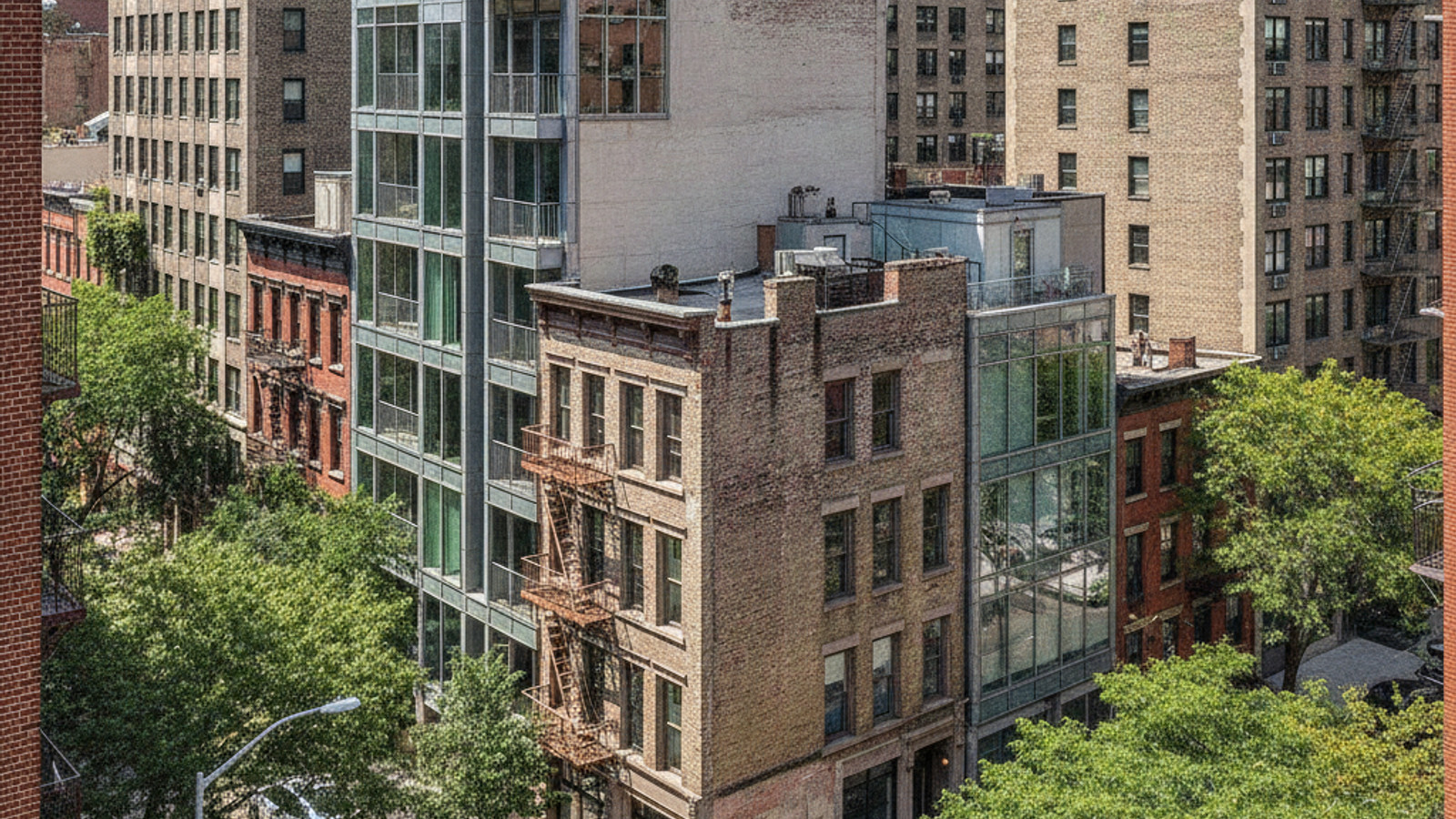
Today, walking down the street offers a study in contrasts. You will see shiny glass condos for sale in the Lower East Side rising right next to 100-year-old brick tenements. The area known as "Hell Square" (around Ludlow and Rivington) became a nightlife destination, packed with bars and restaurants, drawing crowds from all over the world.
However, preservationists won significant battles, ensuring that large swaths of the neighborhood retained their low-rise character. It remains a place where the luxury market coexists—sometimes uneasily, sometimes creatively—with long-standing rent-stabilized communities.
Historic Landmarks You Can Visit Today
For those interested in New York City neighborhood guides that focus on history, the LES is basically an open-air museum. Here are a few places where the past is still very much alive:
• The Tenement Museum: Located at 97 and 103 Orchard Street, this is the definitive stop. You can tour restored apartments that show exactly how immigrant families lived in different eras.
• Eldridge Street Synagogue: A stunning 1887 building that was meticulously restored. It represents the grandeur of the Jewish immigrant community of the late 19th century.
• Katz’s Delicatessen: Serving pastrami since 1888. It’s one of the few culinary survivors that looks and smells much like it did over a century ago.
• Essex Market: Originally formed to get pushcarts off the streets, it has evolved into a modern food hall, though it retains its roots as a vendor hub.
• Seward Park: The first municipally built playground in the United States, keeping its role as a central gathering spot for the community.
Living in the Lower East Side Today
So, what does this history mean for someone looking at Lower East Side apartments in 2026? It means you are buying or renting into a neighborhood that refuses to be boring. The vibe is a unique blend of gritty authenticity and modern convenience.
Housing stock here varies wildly. You might look at a renovated pre-war walk-up that still has the "dumbbell" layout (but with modern finishes), or tour a luxury unit with floor-to-ceiling windows offering views of the bridges. The amenities are world-class, with access to some of the best art galleries, indie boutiques, and diverse food options in Manhattan.
Ultimately, living here means being part of a continuing story. Whether you are grabbing a coffee on Clinton Street or walking past a community garden, the layers of Dutch, German, Jewish, Italian, and Latino history are always right beneath your feet.
Frequently Asked Questions
Why was the Lower East Side known as the most crowded place on earth?
In the early 1900s, mass immigration from Eastern and Southern Europe packed thousands of people into small tenement apartments. At its peak, density reached approximately 700 people per acre in certain wards, far surpassing the density of modern Mumbai or Tokyo.
What is the difference between the Lower East Side and the East Village?
Historically, the East Village was simply the northern part of the Lower East Side. It wasn't until the 1960s that real estate agents and artists began branding the area north of Houston Street as the "East Village" to distinguish its counter-culture scene from the traditional immigrant enclaves below Houston.
When did the Lower East Side start gentrifying?
While there were earlier waves of artists moving in during the 80s, significant gentrification and real estate development accelerated in the late 1990s and early 2000s. This period saw the arrival of luxury hotels, high-end boutiques, and a sharp increase in property values that continues today.
What immigrant groups settled in the Lower East Side?
The neighborhood has been a gateway for many groups, starting with the Germans and Irish in the mid-19th century. They were followed by massive waves of Eastern European Jews and Italians, and later in the 20th century, by Puerto Rican, Dominican, and Chinese communities.