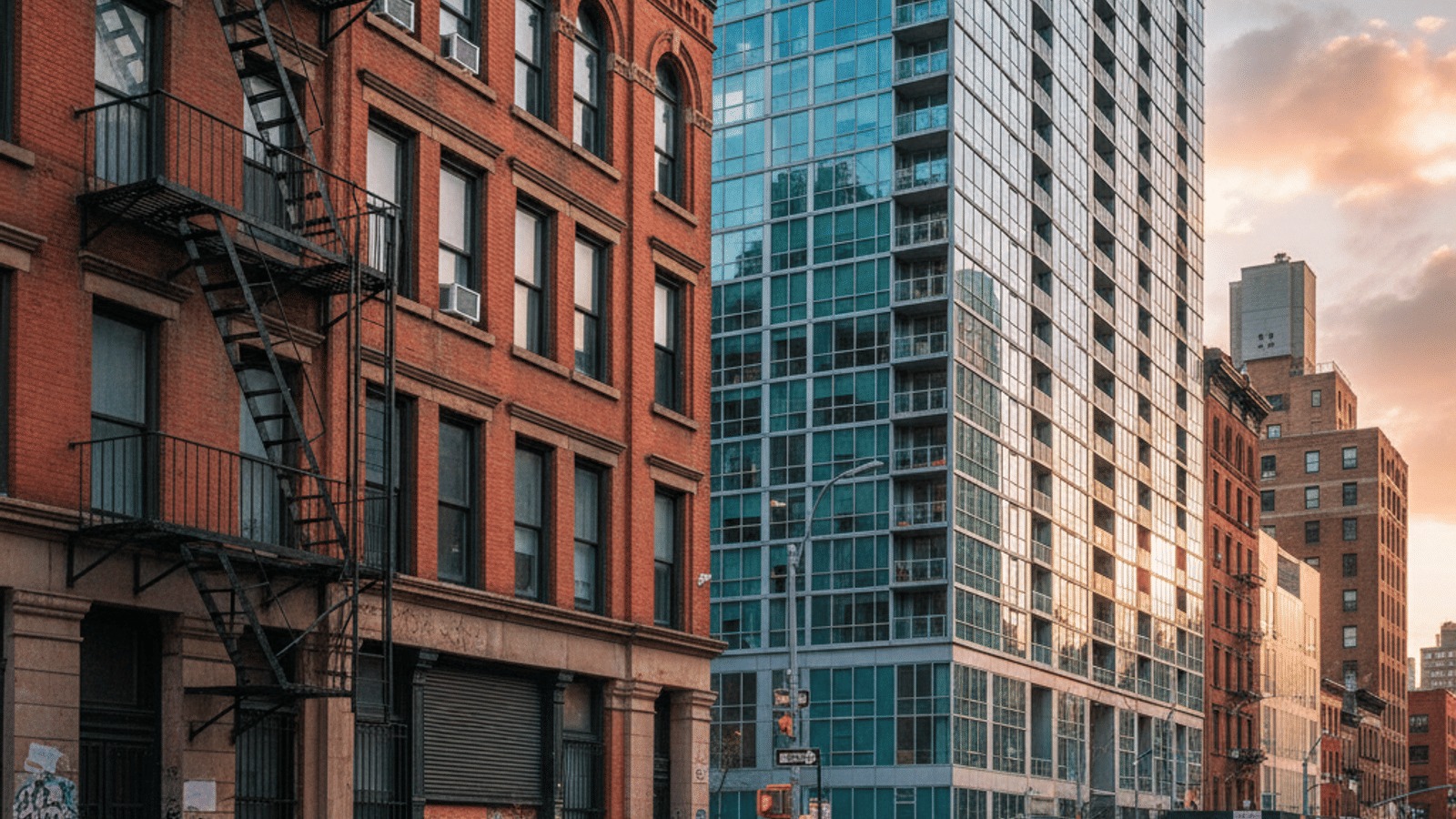
Dreaming of Manhattan often starts with the Lower East Side, with its gritty tenements, fire escapes, and cutting-edge nightlife. Roughly below Houston Street between the Bowery and the East River, the LES is a true “high-low” neighborhood: $5 dumplings next to $20 cocktails, historic walk-ups beside glass condos.
It’s energetic, but housing is the biggest monthly expense — whether you’re looking at homes for sale in the Lower East Side or hunting rentals, plan your budget carefully and know where your money will go.
Rental Costs: Walk-Ups vs. Luxury Towers
The LES rental market is two worlds in one: old pre-war walk-up tenements—no elevators, lots of character—and new luxury developments with doormen, gyms, and roof decks. Luxury units skew the “average” rent upward; if you walk up four flights and use laundromats, you can find much lower prices. Landlords typically require about 40× the monthly rent to qualify.
Here is a realistic look at what you might expect to pay per month:
• Studios: ~$3,900 – $4,700. Prices drop for older walk-ups, often rising for doorman buildings.
• 1-Bedroom: ~$4,600 – $5,800.
• 2-Bedroom: ~$5,300 – $7,900. The higher end usually represents luxury doorman buildings.
• Deal Finding: Older walk-ups can sometimes be found for under $3,000, but apartments for rent in the Lower East Side at that price point move incredibly fast.
Buying in the LES: Condos vs. Co-ops
If you’re buying, the market splits between co-ops and condos. Co-ops dominate the older stock and usually cost less but come with stricter rules — board interviews and larger down-payment requirements — while condos are newer and more flexible, at a premium.
You’ll also see shockingly cheap listings at around $500K for a two-bed — these are often HDFC co-ops: income-restricted, resale-capped, and sometimes hit with flip taxes. For market-rate purchases, always factor in monthly HOA/maintenance fees; they can be surprisingly high in staffed, amenity-heavy buildings.
• Median Sales Price - Overall: ~$735,000 – $999,000.
• Price per Square Foot: ~$1,200 – $1,800.
• Comparison: Co-ops here are often significantly cheaper than the Manhattan condo median, which hovers around $1.6M.
Monthly Utilities and Bills
Rent or mortgage is the only part where your bills will remain similar, but age really shows when it comes to how much your bills will vary each month. In pre-war apartments, heat and hot water are either heated by radiators or are included with your rent. In newer buildings, you may be liable for electric heat.
Cooling is another. Most LES apartments are not equipped with air conditioning. Instead, LES apartments are outfitted with window units. If you choose to use these in an NYC summer, be prepared to see your electricity bill go through the roof. Another thing you should keep in mind is laundry. Most LES apartments are not equipped with washers and dryers. If your building doesn’t have a laundry facility, be prepared to shell out extra cash for laundry or head out to the local laundromat.
• Basic Utilities such as Electric/Gas: ~ $150 - $200/mo, plus you could see jumps to $300+ during July/August.
• Internet: ~ $60 - $80/mo with standard internet services like Spectrum or Verizon Fios.
• Laundry: If outsourced, budget $20-$40 a week if
Food Expenses: The 'Cheap Eats' Capital
The presence of the culinary delights in the Lower East Side is one of the greatest benefits of living here, and ought to help the high rent costs if managed well. This is considered the "cheap eats" hub of the city and is known for the restaurants that serve the entire meal for less than $10. But for shopping, the presence of the Essex Market and Trader Joe's at Grand Street is great, though the local bodegas might end up charging high prices.
The actual danger to your budget will be the lure of dining out. The food is so delicious and accessible that often times instead of cooking, a person will rarely be found doing so. A dollar dumpling for lunch and then blowing a c100 sum on a final meal with friends on the same block.
• Bargain Eats: Dumplings ~$5, Pizza Slices $3-$5, or Bagels $5
• Sit-down Dinner: $30-$60+ per person - this generally covers a standard meal
• Cocktails: Prices seen are around 16-20 USD per cocktail in most bars.
Transportation: Subways, Ubers, and Walking
Getting around from the Lower East Side is generally easy, with the Delancey/Essex station serving as a major hub for the F, J, M, and Z trains. This connects you quickly to Midtown, Brooklyn, and the Financial District.
Because the neighborhood is so dense, walkability is high. Many locals walk to SoHo, the East Village, or Chinatown, which saves on transit fares. However, if you enjoy the nightlife, be wary of rideshare costs. Ubers and Lyfts back from Brooklyn or uptown late at night often hit surge pricing, turning a $20 ride into a $50 expense.
• MTA Fare: ~$2.90 per ride where the weekly cap is around $34.
• CitiBike: ~$205/year for an annual membership.
• Rideshare: Trips to Midtown or Brooklyn can easily run $30–$50+.
Hidden Costs: Broker Fees and Taxes
When you are putting together your initial budget, you need to look beyond the monthly rent check. The most painful upfront cost in Manhattan is the broker fee. It is standard for tenants to pay this fee, which often amounts to 15% of the annual rent—a massive check to write before you even move in.
Once you are settled, remember that living in NYC comes with a local income tax. Residents pay a city tax ranging roughly from 3% to nearly 4% on top of state and federal taxes. This comes out of your paycheck automatically and can be a surprise for newcomers moving from out of state.
• Broker Fees: Budget 15% of the annual lease upfront.
• Application Fees: Capped at $20 for rental applications.
• Renter's Insurance: Highly recommended and usually costs ~$15–$30/mo.
Lower East Side vs. The Neighbors
Sometimes the best way to judge value is to look at the competition and the best neighborhoods in the Lower East Side. If you aren't 100% sold on the LES, here is how it stacks up against nearby areas.
The East Village has a very similar vibe and pricing structure. However, walk-ups in the East Village can sometimes be slightly more expensive due to extremely low inventory. Williamsburg, across the bridge, often offers more square footage and newer amenities for the same price, but you lose the convenience of being in Manhattan. Interestingly, the Upper East Side is often cheaper for rent than the LES, but you trade the downtown "cool" factor for a quieter, more traditional neighborhood feel.
FAQs
Is the Lower East Side expensive to live in?
Yes, compared to national averages, it is pricey, but it offers a wider range of price points than neighborhoods like Tribeca or Chelsea. You can still find relative value in older tenements, whereas the luxury condo market pushes the average cost up significantly.
What salary do you need to live in the Lower East Side?
Landlords typically require you to earn 40 times the monthly rent. This means if you are looking at a studio renting for $4,000, you would need an annual household income of roughly $160,000 to qualify.
Is rent cheaper in the Lower East Side or Williamsburg?
For the same monthly rent, you will generally get more space and better building amenities in Williamsburg, while the LES offers the premium of a Manhattan zip code.
Is the Lower East Side Worth the Cost?
Living in the Lower East Side is expensive, there is no getting around that. But for many residents, the cost is justified by the access to world-class culture, history, and energy the second you step out your door. It is an ideal spot for people who prioritize social life and location over having a massive living room. If you are willing to hunt for rent-stabilized units in older buildings, you can often make the numbers work and enjoy one of the most exciting neighborhoods in the world.