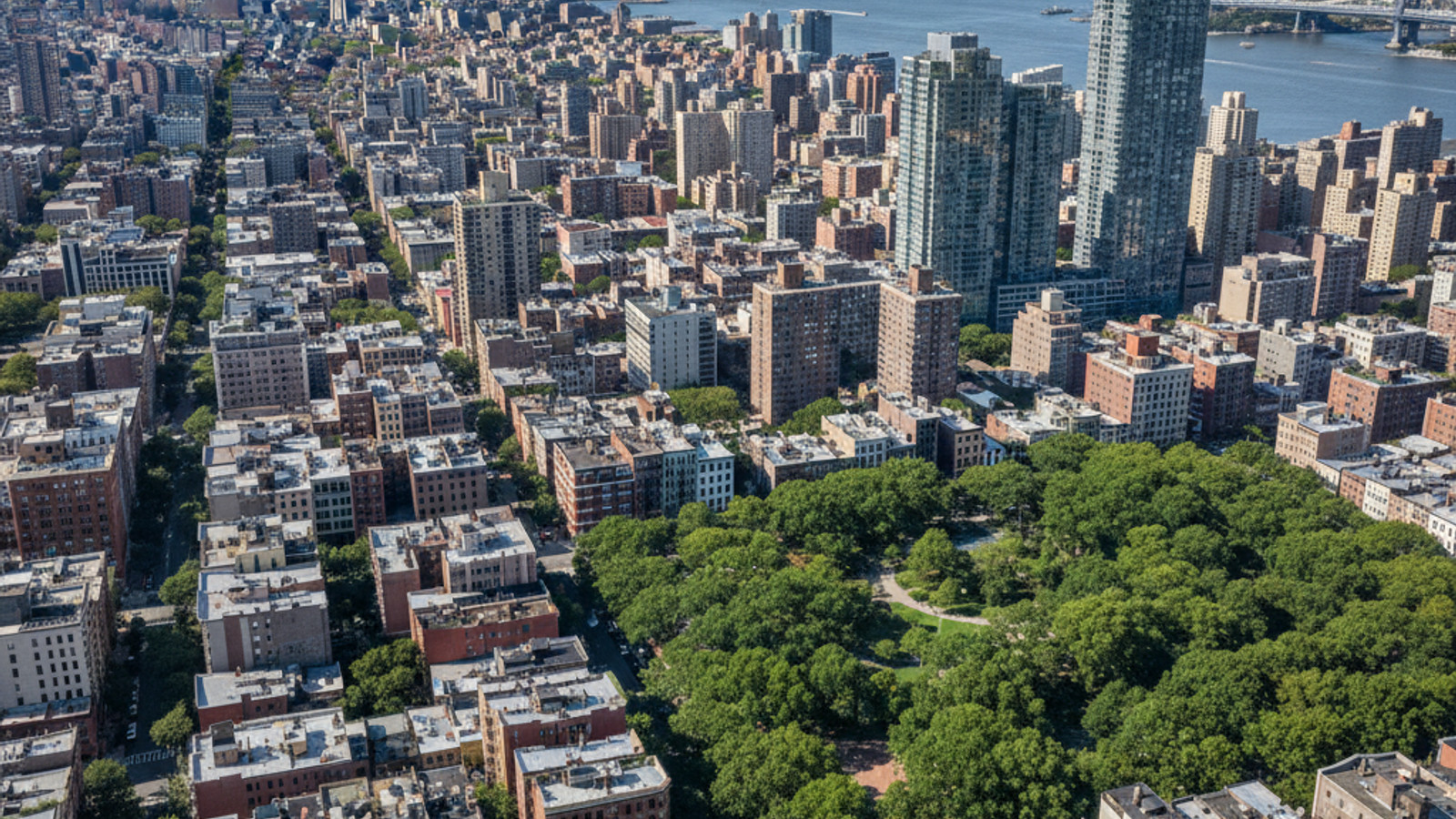
The neighborhood's history as an immigrant hub is still visible in its historic tenement architecture, which now stands alongside modern residential towers driven by recent gentrification. Buyers looking into living in Lower East Side, NY, will find a dense urban environment with immediate access to rapid transit, local businesses, and waterfront parks.
Property values in this neighborhood have remained steady through the first half of 2026. Understanding the local housing stock, commute times, and school district setup helps buyers determine if this area matches their daily needs.
Real Estate Market and Property Costs
Median property prices in the neighborhood reflect steady demand for downtown Manhattan real estate. As of early 2026, the median price for a local co-op sits around $970,000. Buyers looking at modern condominiums will see a higher median price closer to $1,100,000.
The housing inventory is split between older, pre-war buildings and newer construction. Historic multi-bedroom apartments often feature classic layouts, but many lack elevators or in-unit laundry. New condo developments provide these modern amenities at a premium price point.
Available homes tend to move quickly when priced correctly. Buyers should review building financials closely and factor in homeowners insurance, especially when considering a co-op purchase where board approval is required.
Parks, Green Spaces, and Outdoor Recreation
The neighborhood provides several dedicated green spaces despite its dense grid of streets and avenues. Seward Park serves as a central hub for outdoor activity. This space features public playgrounds, basketball courts, and shaded seating areas for daily use.
The eastern edge of the neighborhood borders the East River, offering expansive waterfront access. East River Park includes paved paths for running and cycling along the water. The park also contains sports fields and an amphitheater for community events.
These public spaces provide essential outdoor areas for residents living in high-density apartment buildings. City planners maintain these parks year-round to support the heavy daily foot traffic from surrounding blocks.
Public Schools in NYC Geographic District 1
The Lower East Side falls within NYC Geographic District 1. Unlike many parts of the city, this district operates on a school choice system rather than fixed geographic zoning. This means residents can apply to any elementary or middle school within the district boundaries.
The area contains several specialized public school options. The Earth School focuses on environmental education, while P.S. 184 Shuang Wen offers a dual-language program in English and Mandarin. The Neighborhood School is another choice located right within the district.
Educational resources extend beyond the classroom walls. The Seward Park Library provides local students and residents with access to research materials, quiet study spaces, and community programming.
Transportation and Daily Commute Times
Transit access is a major factor driving residential demand in this part of Manhattan. The neighborhood connects directly to several major subway lines, primarily through the Delancey Street and Essex Street stations. Residents have direct access to the F, M, J, and Z trains.
Surface transportation offers an alternative to the subway system. The M15 Select Bus Service runs along First Avenue, providing a direct route up the east side of Manhattan. Commuters can use this route to reach medical centers and offices further uptown.
Travel times to major employment centers are relatively short. Most residents rely on the subway for these daily trips:
Financial District: Commuting downtown takes 15 to 20 minutes door-to-door via the J or Z trains.
Midtown Manhattan: Traveling to Midtown offices requires 20 to 30 minutes using the F or M lines.
Brooklyn: The Williamsburg Bridge provides immediate bike or transit access across the river.
Daily Conveniences and Community Amenities
Essex Market serves as the primary grocery hub for the neighborhood alongside famous local staples like Katz's Delicatessen. This large indoor facility houses dozens of independent vendors selling fresh produce, meat, seafood, and specialty items. Residents rely on this market for daily food shopping alongside smaller corner stores.
Healthcare access is readily available throughout the surrounding blocks. The neighborhood features several urgent care centers, local pharmacies, and outpatient medical clinics. Major hospitals are accessible via a short ride on the M15 bus or nearby subway lines.
Community centers play an active role in local life. These facilities offer neighborhood programming, fitness classes, and educational workshops. The dense concentration of amenities, including a diverse restaurant scene, means most daily errands can be completed within a five-block radius.
Frequently Asked Questions
What are the local schooling and housing options for households with children?
Buyers seeking space often target pre-war tenements, which frequently offer larger multi-bedroom layouts than modern builds. For education, District 1's open enrollment allows residents to bypass zoned boundaries and apply directly to specialized programs like The Earth School. When it comes to outdoor space, Seward Park provides immediately accessible playgrounds and sports courts.
How do residents research crime statistics in the Lower East Side, NY?
Local crime data is publicly managed by the NYPD's 7th Precinct, which covers the area. Residents can review historical and current incident reports through the city's CompStat 2.0 portal. This database provides mapped statistics for specific blocks and avenues.
What is the noise level like when living on the Lower East Side, NY?
Ambient noise varies depending on the specific street and proximity to commercial corridors. Avenues with active nightlife and boutique hotels, like Orchard Street or Allen Street, generate late-night foot traffic and music. Buyers looking for quieter environments should target side streets, invest in earplugs, or look for higher-floor apartments facing interior courtyards.