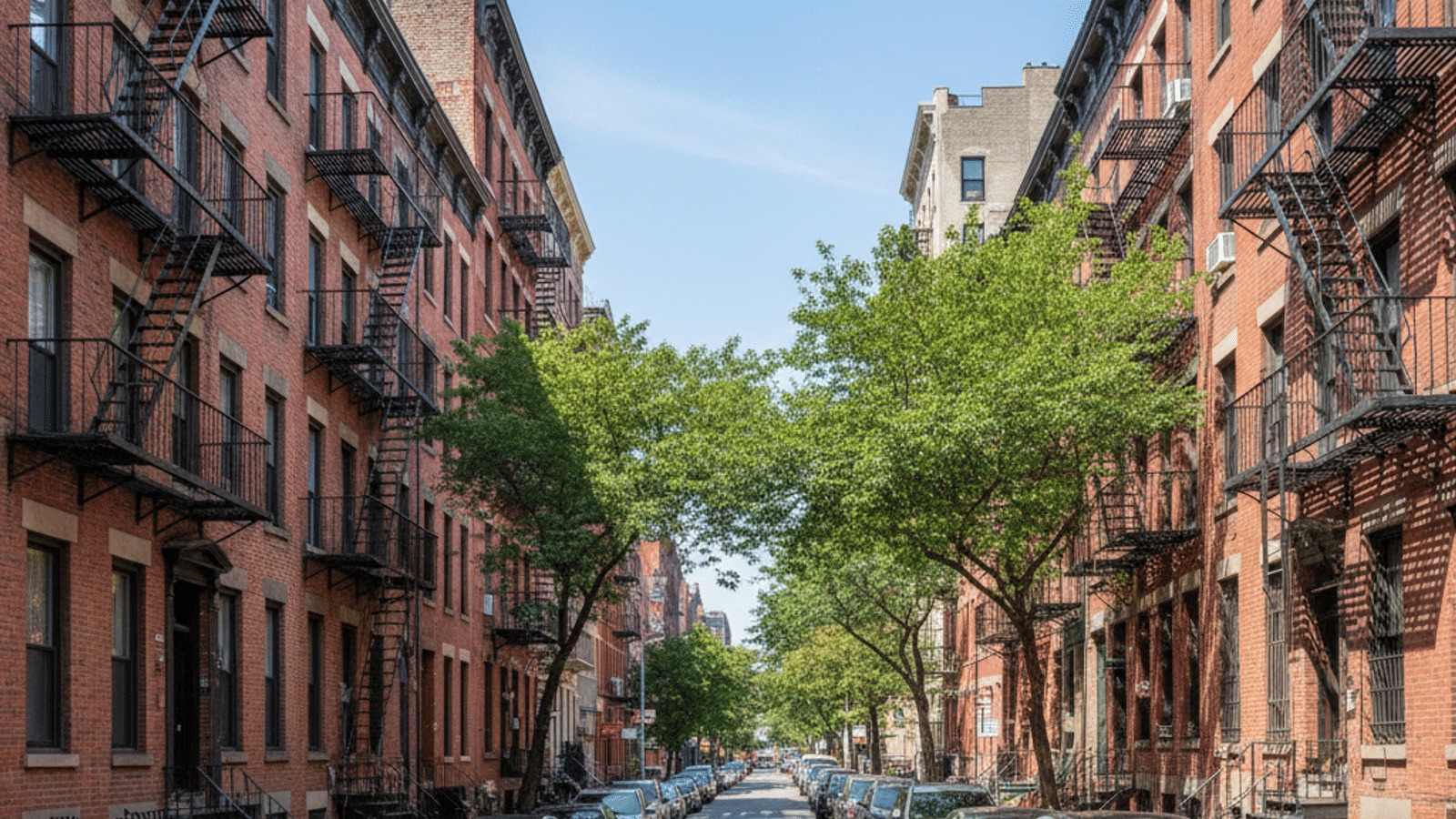
The Lower East Side (LES) is easily one of Manhattan’s most electric neighborhoods. Between the history of the tenement buildings, the legendary food scene, and the nightlife, it has an energy you just don’t find anywhere else. However, looking at listing prices here can feel like a splash of cold water.
Many aspiring buyers assume they are completely priced out of this zip code, but that isn't always the case. There is a "middle path" between luxury condos and renting forever. The key is understanding that assistance in this neighborhood usually comes in two forms: direct financial help (cash for your down payment) and inventory-based assistance (homes that are price-subsidized, like HDFCs).
If you are willing to navigate some paperwork and strict eligibility rules, you might find that owning a piece of the Lower East Side is actually within reach. Let’s look at the current Lower East Side market trends and break down exactly how to fund a purchase here.
HDFC Co-ops: The Lower East Side’s Hidden Inventory
Before we talk about cash grants, we have to talk about the buildings themselves. If you are browsing listings in the LES or East Village and see a spacious apartment priced significantly below the neighborhood average, you are likely looking at an HDFC co-op.
Housing Development Fund Corporation (HDFC) buildings are a staple of the LES real estate market. These are income-restricted cooperatives that were often converted from city-owned properties to tenant ownership decades ago. They are the primary way moderate-income buyers get a foothold in this neighborhood.
The Trade-Off
Here is how it works: You get a purchase price that is often hundreds of thousands of dollars less than a market-rate condo. In exchange, you must agree to strict rules:
• Income Caps: You cannot earn more than a certain amount (usually tied to the Area Median Income, or AMI) at the time of purchase.
• Flip Taxes: If you sell the apartment later, a large chunk of your profit (sometimes up to 30%) goes back to the building’s reserve fund, not your pocket. This is designed to discourage house flippers and keep the building affordable.
Buying an HDFC is not technically a "grant," but it is a massive subsidy built directly into the price. For a comprehensive look at how these boards operate, you’ll want to read a guide to HDFC co-ops before scheduling viewings.
NYC HomeFirst Down Payment Assistance Program
If you need help with the cash required to close the deal, the HomeFirst Down Payment Assistance Program is the heavy hitter in New York City. Recently, the city significantly expanded this program, making it much more relevant for buyers in expensive areas like the LES.
How it works: The program offers qualified first-time buyers up to $100,000 toward their down payment or closing costs. The amount you get is generally limited to 20% of the home's purchase price or $100,000, whichever is less.
It is a "Forgivable Loan": This is the part that confuses people. It is technically a loan, but it functions like a grant if you stay put. You do not make monthly payments on this $100,000.
• If you live in the home for 10 years (for loans up to $40,000) or 15 years (for loans over $40,000), the loan is completely forgiven.
• The lien is removed, and you owe the city nothing.
Eligibility Changes: Previously, the income limits were too low for most people buying in Manhattan. However, the program now allows for incomes up to 120% of the Area Median Income (AMI). This shift opens the door for many working professionals in the neighborhood who previously made "too much" to qualify for help but "too little" to buy a $1.2 million condo.
You will still need to contribute some of your own money—typically 3% of the purchase price—but HomeFirst can cover the rest of the down payment and even help you calculate your closing costs to ensure you are fully covered.
State of New York Mortgage Agency (SONYMA) Programs
While HomeFirst helps with the down payment, SONYMA (State of New York Mortgage Agency) helps with the actual mortgage. They offer specific loan products designed to beat the rates you might see from big commercial banks.
Achieving the Dream: This is one of their most popular programs. It features a lower interest rate and requires a very low down payment. In some scenarios, you might only need to contribute 1% of the purchase price from your own funds, with the rest covered by subsidies.
Down Payment Assistance Loan (DPAL) SONYMA also offers its own assistance called DPAL. This is a 0% interest second mortgage that can be used for down payment or closing costs.
• Standard DPAL: usually capped at 3% of the purchase price (up to $15,000).
• DPAL Plus: offers up to $30,000, though this is reserved for buyers with lower incomes.
Can you combine them? Strategically, yes. It is possible to layer SONYMA loans with HDFC purchases, and sometimes even with HomeFirst grants, though the underwriting gets complicated. You have to ensure the specific census tract of the LES property qualifies for the specific SONYMA product you want.
Local Resources: AAFE and Neighborhood Non-Profits
You cannot navigate these programs alone. In fact, most of them—including HomeFirst and SONYMA—mandate that you complete homebuyer education before you can even apply.
In the Lower East Side, your best resource is often Asian Americans for Equality (AAFE). Rooted deeply in the LES and Chinatown community, AAFE is a HUD-approved counseling agency specifically geared toward first time home buyers Lower East Side NY. They know the local building inventory better than almost anyone and can guide you through the certification process required to unlock these funds.
Another key organization is Neighborhood Housing Services of NYC (NHSNYC). They actually administer the HomeFirst program. Getting in touch with a counselor at AAFE or NHSNYC should be your very first move, usually before you even hire a real estate agent. Looking for the best real estate agent in the Lower East Side also helps.
Do You Qualify? Understanding Income Limits (AMI)
Almost every program mentioned above hinges on one metric: Area Median Income (AMI). This is the federal government’s calculation of the middle-income point for the NYC metro area.
The 120% Sweet Spot Currently, the magic number for many LES buyers is 120% AMI. This is the ceiling for the expanded HomeFirst program and is also a common cap for HDFC co-ops in the area.
• For a household of two, 120% AMI is roughly $155,000 (always verify with the latest HUD charts as this changes annually).
• If you earn significantly over this, you likely won't qualify for the $100,000 assistance, though you might still find HDFC buildings with higher caps (some go up to 165% AMI).
Credit and Assets Income isn't the only factor. While government loans like FHA or SONYMA might accept credit scores starting around 620, Lower East Side co-op boards are notoriously strict. They often look for scores of 700+ and a low debt-to-income ratio. Furthermore, some programs have asset limits—meaning if you have $200,000 sitting in a brokerage account, you may be disqualified from receiving down payment assistance.
Other Grants: FHLBNY and Closing Cost Help
If you are looking to stack more savings, ask your lender about the Federal Home Loan Bank of NY (FHLBNY). Their "Homebuyer Dream Program" can offer grants generally in the $20,000 range.
Additionally, many banks offer their own lender credits (often $3,000 to $7,000) for buyers purchasing in low-to-moderate income census tracts. Since parts of the LES fall into these specific tracts, you might get closing cost credits just for buying on a specific block.
Step-by-Step: How to Layer These Programs
Trying to combine a state mortgage, a city grant, and a co-op application can feel like juggling. Here is a logical order of operations to keep it manageable:
Check your AMI and Credit: Look at your tax returns and credit report first. If you are way over the 120% AMI limit, HomeFirst is likely off the table, so you should focus on HDFC inventory instead.
Enroll in Education: Contact AAFE or NHSNYC immediately. The course takes time, and you cannot apply for money without the certificate.
Build Your Professional Team: Find a loan officer who is experienced with SONYMA and grant layering, as big-box banks often struggle with these nuances. This is also the time to partner with the best real estate agent Lower East Side has to offer—ideally someone who knows how to navigate the complex board packages and income verification processes of local HDFCs.
Target the Right Home: Look for understanding HDFC income restrictions in listings or find market-rate condos that fall under the HomeFirst purchase price limits.
Apply for Grants: Once you have an accepted offer, your lender and counselor will submit the grant applications. Do this quickly—funds are often distributed on a first-come, first-served basis.
FAQs
Can I use the HomeFirst grant for an HDFC co-op in the Lower East Side?
Yes, this is a very common strategy. As long as the HDFC building is approved by the lender and you meet the income requirements for both the building and the grant program, you can use the $100,000 HomeFirst loan to buy into the co-op.
What is the income limit for homebuyer assistance in NYC?
It depends on the program, but the most common limit for the new HomeFirst expansion is 120% of the Area Median Income (AMI). For a single person, that is roughly $135,000, and for a couple, it is around $155,000, though you must check the current year's HUD charts for exact figures.
Do I have to pay back the NYC down payment assistance?
No, provided you stay in the home for the required residency period. The HomeFirst funds are structured as a forgivable loan; if you live in the property for 10 to 15 years (depending on the loan amount), the debt is erased.
Is it harder to get a mortgage for a home in the Lower East Side using these programs?
It can be more complex because you have two hurdles: the lender and the co-op board. While a lender might approve you for a SONYMA loan with 3% down, a strict LES co-op board might still prefer to see a buyer with 20% down, so it is vital to find "grant-friendly" buildings and boards.