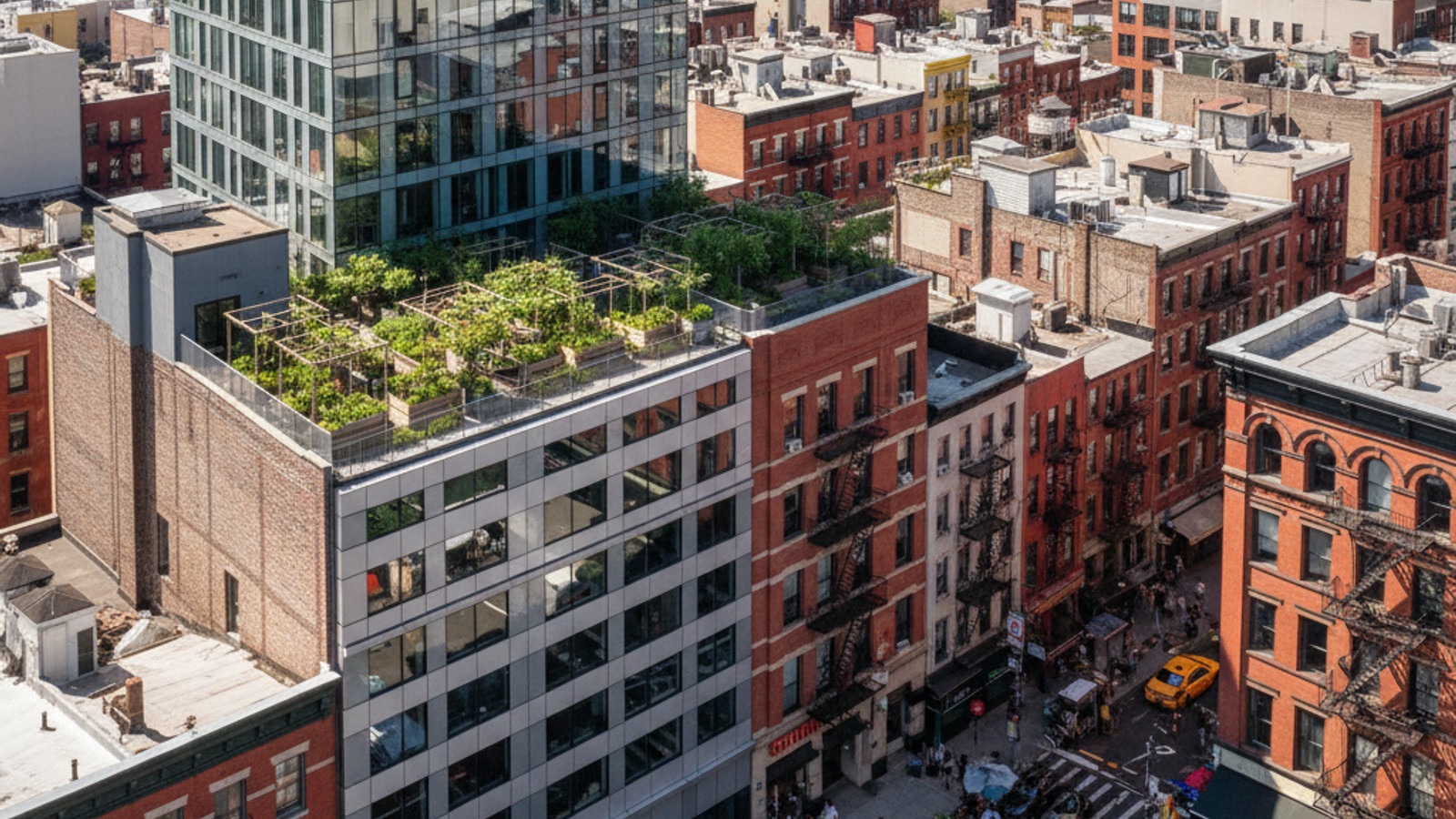
If you walked past the intersection of Delancey and Essex Streets a decade ago, you would have seen mostly empty parking lots. For nearly 50 years, the Seward Park Urban Renewal Area (SPURA) sat vacant, a hole in the fabric of one of Manhattan's most historic neighborhoods. Today, that space has been completely reimagined as Essex Crossing, a 1.9 million-square-foot "city within a city" that has redefined living in the Lower East Side.
This isn't just a few new apartment buildings; it is a coordinated master plan involving nine separate sites. Developed by Delancey Street Associates—a partnership including L+M Development Partners, BFC Partners, and Taconic Investment Partners—the project mixes high-end residential towers with office space, vast retail, and community facilities.
For potential buyers and renters, Essex Crossing offers a distinct proposition: the gritty, authentic culture of the LES right outside your door, paired with the polished, elevator-building convenience usually found in Midtown. It’s a place where you can visit a world-class museum, bowl a few frames, buy groceries, and go to the movies without ever crossing a street.
The Master Plan: A City Within a City
The scope of Essex Crossing is massive, effectively creating a new center of gravity for the neighborhood. Roughly bounded by Delancey, Essex, Broome, and Grand Streets, the development was designed to be permeable, encouraging foot traffic to flow naturally between the new glass towers and the surrounding historic tenement blocks.
Connectivity is the main selling point here. The development sits directly atop the Delancey St/Essex St subway station, giving residents immediate access to the F, M, J, and Z trains. For commuters, this is as good as it gets in this part of town.
Beyond the subway, the buildings are connected by a logic of convenience. Several sites are linked by skybridges or underground concourses, allowing for easy movement between residential lobbies and retail hubs. While the area is dense, the developers prioritized green space, integrating a 15,000-square-foot park and arguably one of the largest urban farms in Manhattan on a rooftop, offering residents a rare breath of fresh air in a concrete-heavy district.
Essex Crossing Apartments: Condos, Rentals, and Lotteries
When looking for homes for sale in the Lower East Side, you usually have to choose between charm (pre-war walk-ups) and amenities (new construction). Essex Crossing is entirely the latter. The residential mix here is unique because it was mandated to be 50% affordable and 50% market-rate, creating a diverse economic mix across the 1,000+ new residences.
One Essex Crossing (Condos)
If you are looking to buy, One Essex Crossing is the flagship luxury condominium. It features high-end finishes that rival anything in Tribeca, with a specific focus on light and views. The amenities are extensive, highlighted by "The Sun Room," a glass-enclosed relaxation space, and a dedicated fitness center. As of late 2025 and early 2026, pricing here reflects the luxury status:
1-Bedroom units: Generally range from $1.4M to $1.5M.
2-Bedroom units: Typically command between $1.8M and $2.9M depending on the view and floor.
The Essex and The Rollins (Rentals)
For renters, the two most prominent buildings are The Essex and The Rollins. The Essex (Site 2) is the tallest tower in the development, offering sweeping views of the Manhattan skyline and direct elevator access to the cinema below. The Rollins (Site 5), named after jazz legend Sonny Rollins who once lived on the site, targets a mid-tier luxury demographic with a focus on practical amenities.
Studios: Start around $3,600+.
1-Bedrooms: Hover near $4,400+.
2-Bedrooms: Can easily exceed $6,500+.
242 Broome and The Artisan
242 Broome offers a boutique condo experience with a striking champagne-colored façade and interiors designed to feel calm and artistic. Meanwhile, The Artisan (Site 6) focuses on the rental market with a creative vibe, offering extensive rooftop spaces and lounges designed for remote work and socializing.
Affordable and Senior Housing
A major component of the project is the Frances Goldin Senior Apartments, which provides 100% affordable housing for seniors. Across the other buildings, the "affordable" units are allocated via the NYC Housing Connect lottery system. These units are highly coveted and rent-stabilized, ensuring long-term affordability for those who win a spot.
Shopping & Entertainment: The Essex Market and More
The commercial anchors at Essex Crossing are what make living here so convenient. The centerpiece is undoubtedly Essex Market. Moving from its cramped historic quarters across the street, the new Essex Market is a sunlit, modern food hall on the ground floor. It retains beloved vendors like Shopsin’s and a Veselka stand, while adding butchers, fishmongers, and specialty grocers. It is the pantry for the neighborhood.
Important Update: The Market Line
It is crucial to distinguish between the upstairs market and the downstairs space. The Market Line, which was the expansive underground food hall and bazaar, closed its doors in April 2024. While the upstairs Essex Market remains open and vibrant, the downstairs commercial space is currently being re-evaluated for future use. If you are reading older guides to the area, be aware that the underground nightlife and food hall scene is no longer active.
Retail and Culture Anchors
For day-to-day needs, the development solved a long-standing issue in the area: a lack of big-box essentials. The arrival of Trader Joe’s and Target in the basement levels has been a game-changer for residents who previously had to trek to Union Square for these staples.
On the cultural front, the International Center of Photography (ICP) moved its museum and school from the Bowery to a gleaming new space here, solidifying the area's artistic credentials. For entertainment, a Regal Cinemas with luxury reclining seats and The Gutter, a vintage-style bowling alley, provide nightlife options that don't involve crowded bars.
Is Essex Crossing Safe? The Atmosphere Analysis
Safety is often the first question for those considering a move to this zip code. The "Essex Crossing Effect" has significantly changed the feel of these specific blocks. The development area features bright street lighting, private security patrols, and 24-hour door staff in the residential lobbies, creating a bubble of perceived safety that contrasts with the surrounding streets.
However, it is important to remember that this is still the Lower East Side. The neighborhood is famous for its nightlife, and the blocks immediately surrounding the development (often called "Hell Square") can get rowdy late at night with bar-goers. Noise levels can be high, and the Delancey/Essex subway station, while convenient, is a major transit hub that can feel chaotic or gritty during off-hours.
Generally, residents feel safe due to the high density of people and the "eyes on the street" provided by the new retail. Standard city precautions regarding property crime, such as phone snatching, still apply, but the desolate feeling of the old parking lots is gone.
Final Verdict: Who Should Live in Essex Crossing?
Essex Crossing has successfully bridged the gap between the area's history and its future. It offers a lifestyle that is rare in downtown Manhattan: full-service luxury living on top of a subway hub.
The Pros:
Unbeatable convenience with Trader Joe's, Target, and the subway downstairs.
Modern amenities like central air, in-unit laundry, and elevators—luxuries often missing in the LES.
Immediate access to the vibrant food culture of Essex Market.
The Cons:
The price point is high, comparable to established luxury neighborhoods.
The intersection of Delancey and Essex is loud, busy, and visually chaotic.
The closure of The Market Line has reduced the onsite nightlife options slightly.
This neighborhood is ideal for young professionals who want a short commute to Wall Street or Midtown, pied-à-terre buyers looking for a low-maintenance city base, and anyone who loves the energy of the Lower East Side but is done with walk-up apartments and radiators that clang in the night.
Frequently Asked Questions
Is Essex Crossing a good place to live?
Yes, especially if you prioritize convenience and modern amenities. It offers a unique "all-in-one" lifestyle where grocery stores, gyms, cinemas, and subway access are all within a single block radius, which is rare for the Lower East Side.
What happened to The Market Line at Essex Crossing?
The Market Line, which was the underground food hall connected to the development, permanently closed in April 2024. However, the city-run Essex Market located on the ground floor remains fully open and operational.
Are the apartments in Essex Crossing rent-stabilized?
The market-rate rentals in buildings like The Essex and The Rollins are generally not rent-stabilized. However, the affordable units awarded through the NYC Housing Connect lottery are rent-stabilized, offering significant long-term value for qualifying residents.
Which subway lines stop at Essex Crossing?
The development sits directly above the Delancey St/Essex St station. This provides immediate access to the F, M, J, and Z lines, making it one of the most well-connected spots in downtown Manhattan for commuters.