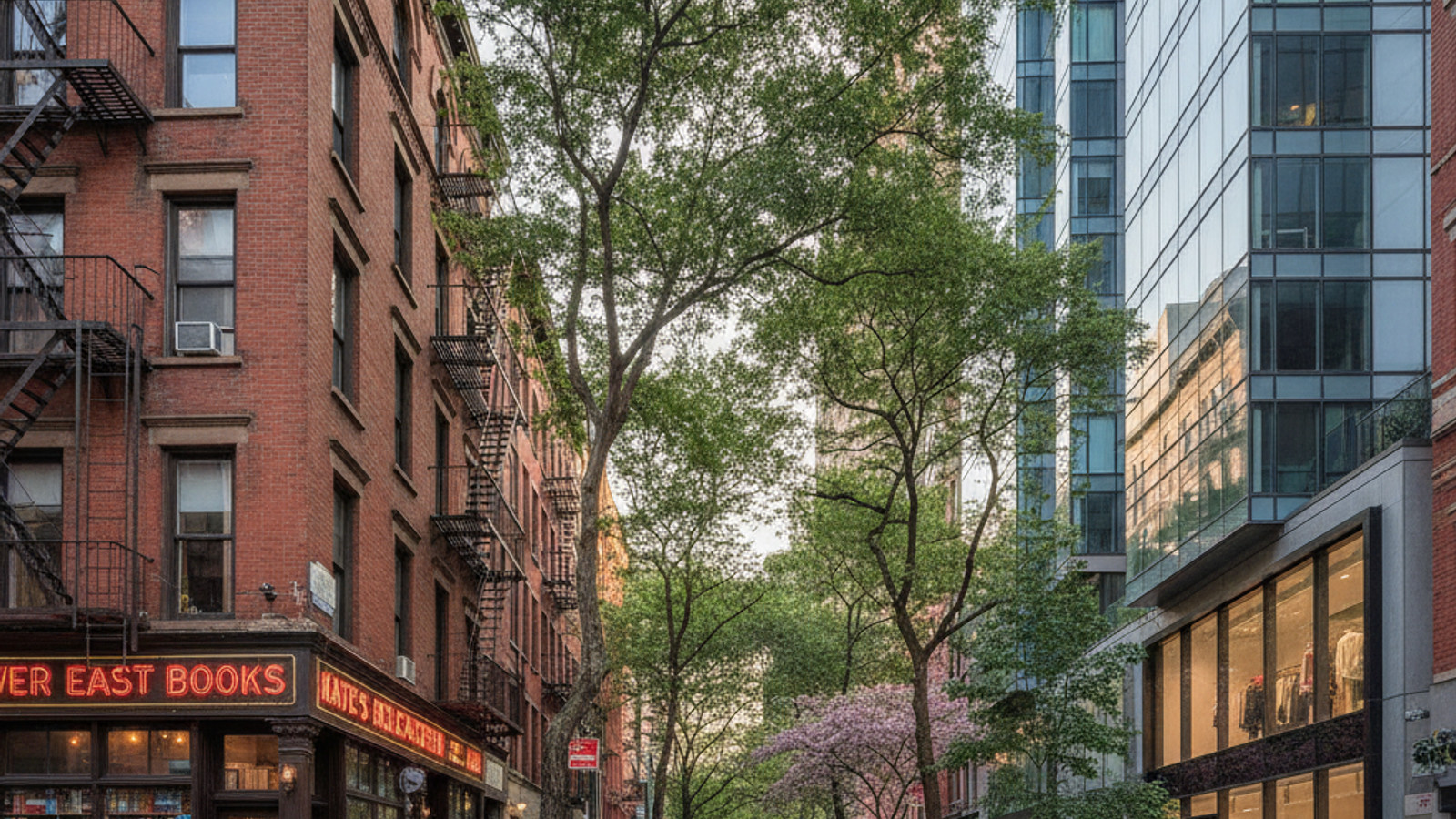
The Lower East Side of Manhattan encompasses a mix of historic pre-war walk-ups and modern glass condominiums. Bounded roughly by Allen Street, East Houston Street, the East River, and Canal Street, this area has evolved from a dense immigrant hub into one of the most active real estate markets in New York City.
Buyers and renters looking at the Best Neighborhoods in the Lower East Side, NY will find distinct pockets, each with its own pricing and housing stock. The neighborhood shares borders with Chinatown and the East Village, offering residents immediate access to multiple downtown districts.
Daily Life in the Lower East Side
The Lower East Side balances modern developments with preserved historical architecture. Landmarks like the Lower East Side Tenement Museum and the Eldridge Street Synagogue anchor the neighborhood's deep roots in 19th-century immigration.
Modern daily routines here often revolve around the local food scene and independent retail. Residents walk to legacy delis, contemporary art galleries, and boutique shops that line the narrow streets.
Access to the East River provides a natural boundary and recreational space on the neighborhood's eastern edge. This layout allows residents to live in a dense urban environment while maintaining direct access to waterfront running paths and sports fields.
The Bowery Corridor
The Bowery marks the western edge of the Lower East Side, serving as a dividing line near SoHo and Nolita. Average rent in this micro-neighborhood sits over $6,200 as of mid-2026.
Housing along this avenue consists mostly of walk-up apartments positioned above commercial storefronts, alongside new boutique hotels. The New Museum anchors the local arts presence, surrounded by dozens of independent contemporary art galleries.
After dark, the Bowery transitions into a major entertainment district. The street is lined with music venues, late-night dining options, and bars that draw crowds from across Manhattan and Brooklyn.
The Dimes Square Enclave
Located where the Lower East Side meets Chinatown, Dimes Square centers around the intersection of Canal Street and Orchard Street. Rents for one-bedroom apartments in this compact area frequently start above $3,300 in 2026.
The real estate inventory here features a mix of pre-war walk-up apartments and luxury condo conversions. Independent cafes, new restaurants, and street art dominate the ground-level retail spaces.
This dense concentration of amenities creates a localized, walkable environment. Residents often rely on the immediate blocks for daily coffee, dining, and socializing rather than traveling to other parts of the borough.
Waterfront Living in Two Bridges
Two Bridges occupies the waterfront space directly between the Manhattan Bridge and the Brooklyn Bridge. Median home prices in this section reached $1,260,000 to $1,500,000 in early 2026.
The housing stock presents a sharp contrast in architectural styles. Older cooperative buildings offer long-established residential communities, while newer luxury glass towers provide unobstructed views of the East River and the Brooklyn skyline.
Living in Two Bridges provides immediate access to the East River Park. Residents use the waterfront greenways for cycling and running, offering a break from the dense street grid just a few blocks north.
The Delancey and Orchard Street Retail Hub
Delancey Street acts as a major east-west artery, with Orchard Street running north-south through the center of the neighborhood's shopping district. South of Delancey, the streets are lined with historic walk-ups and mid-rise apartment buildings.
Legacy food businesses define the culinary landscape in this central corridor. Institutions like Russ & Daughters and Katz’s Delicatessen operate alongside modern apparel boutiques and independent shops.
The modern Essex Market, located at the intersection of Delancey Street and Essex Street, serves as a primary grocery destination. The multi-level facility houses local food vendors, fresh produce stalls, and sit-down dining options under one roof.
Property Types and Housing Costs
The 2026 median home price in the broader Lower East Side is approximately $980,000 to $1,040,000. Median neighborhood rent sits around $5,474 per month.
Buyers evaluating the area will find distinct differences between purchasing a co-op and a condo in Manhattan. Co-ops generally cost less upfront but require board approval and limit subletting, while condos offer more ownership flexibility at a higher price point.
The local inventory moves quickly, with well-priced units spending fewer days on the market than the Manhattan average. Here is a breakdown of the primary property types available:
Pre-war walk-ups: These older buildings form the bulk of the rental and co-op inventory, often featuring exposed brick and smaller floor plans.
Mid-rise elevator buildings: Found primarily along the larger avenues, offering a middle ground in pricing and amenities.
New development high-rises: Concentrated near the waterfront and major intersections, these condos command premium prices for doorman services and modern finishes.
Transit Access and Commute Times
The Delancey St-Essex St station serves as the primary subway hub for the neighborhood. Riders can access the F, M, J, and Z trains from this central location.
Further south, the East Broadway station provides additional access to the F train. From these stations, residents typically face a 15 to 25 minute commute to major employment centers in Midtown Manhattan or the Financial District.
Surface transportation also plays a major role in local transit. The proximity to the Williamsburg Bridge offers a direct route for cyclists and drivers heading into Brooklyn.
Local Parks, Schools, and Daily Amenities
Green space in the Lower East Side is anchored by Seward Park and the extensive recreational facilities at East River Park. These areas provide outdoor seating, sports courts, and playgrounds within a short walk of most residential blocks.
Daily conveniences are spread evenly throughout the neighborhood, reducing the need to travel for basic errands. Buyers should review the specific public school districts and local precinct data when evaluating different blocks.
Grocery options: Residents rely on a mix of full-service supermarkets, the Essex Market, and smaller corner bodegas.
School districts: The area is primarily served by New York City Geographic District #1, which includes several public elementary and middle schools.
Lower East Side Real Estate FAQs
Is the Lower East Side an expensive neighborhood to live in?
Yes, the area carries a premium price tag, with median rents around $5,474 and home prices frequently exceeding $1,000,000 in 2026. However, buyers and renters can find relative discounts by targeting older walk-up buildings rather than new construction condos.
What are the best micro-neighborhoods to live in the Lower East Side?
The Bowery offers immediate access to nightlife and contemporary art, while Two Bridges provides waterfront views and high-rise living. Dimes Square appeals to those seeking a dense, walkable enclave filled with cafes and independent retail.
What transportation options are available in the Lower East Side?
The neighborhood depends on the Delancey St-Essex St subway station for F, M, J, and Z train service. Cyclists and drivers also use the nearby Williamsburg Bridge for a direct route into Brooklyn.