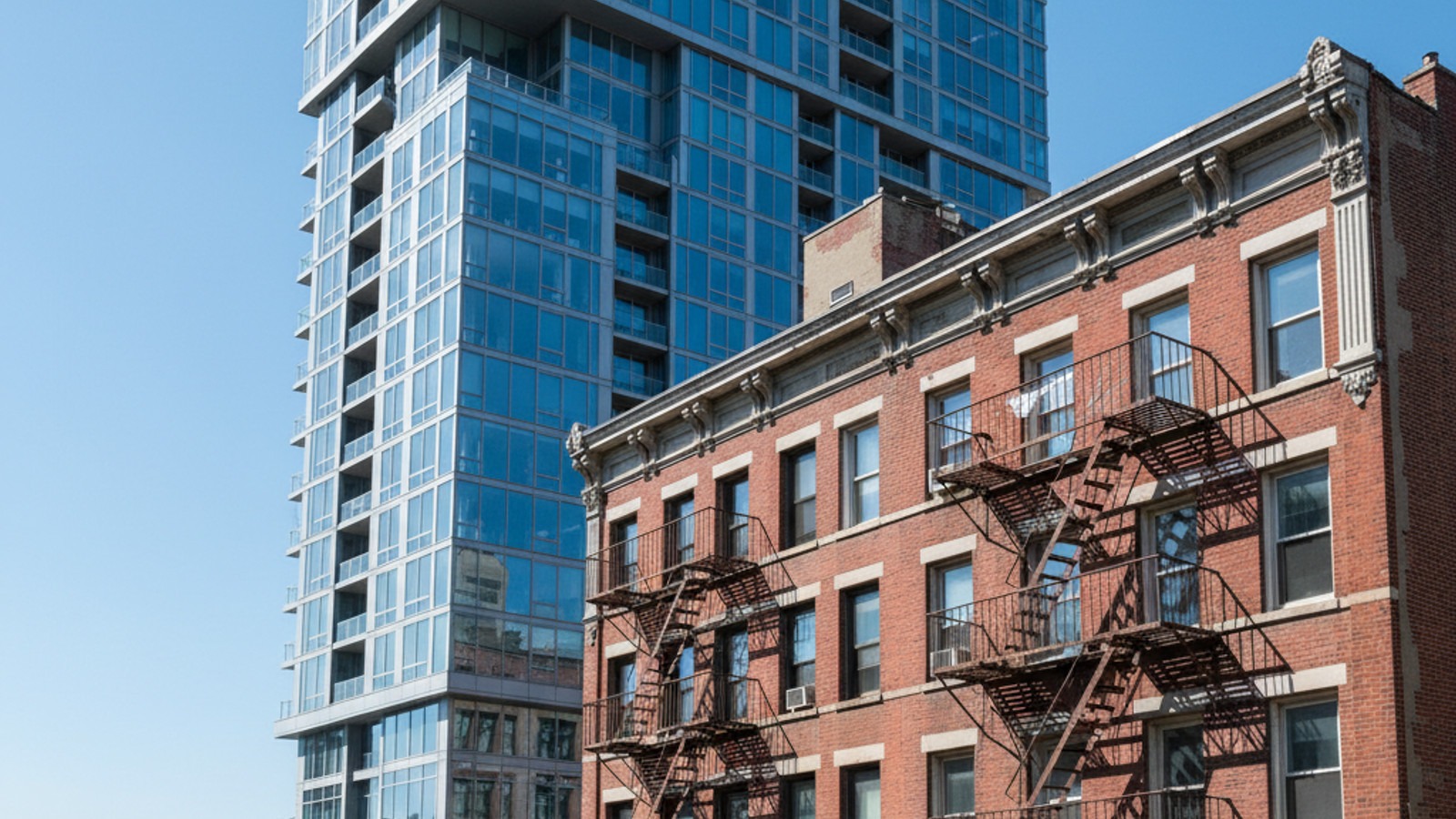
If you are looking to buy a home in the Lower East Side (LES), you are looking at one of the most polarized real estate markets in Manhattan. This is a neighborhood where a fifth-floor walk-up in a pre-war tenement might list for $450,000, while a glass-walled condo with river views just two blocks away asks for $2.5 million.
Because of this mix, looking at a simple "average" price can be dangerous—it hides the reality of what you actually get for your money.
As we move through early 2026, the LES market is settling into a "cool" phase. Sellers are realistic, and while inventory remains tight, the frantic bidding wars of previous years have calmed down. Whether you are a first-time buyer looking for value or an investor eyeing luxury new developments, here is the real breakdown of what it costs to live in this historic neighborhood.
Market Snapshot: The Price of "Grit and Glamour"
The Lower East Side is defined by its duality. On one street, you have history; on the next, you have hyper-modernity. This split creates a massive range in pricing that can be confusing if you just glance at the headlines.
Currently, the blended median sales price in the neighborhood hovers between $740,000 and $975,000. However, take that number with a grain of salt. That median is a mix of affordable co-ops and ultra-luxury condos. If a flurry of units closes at a luxury building like One Manhattan Square, the "average" spikes. If the market sees mostly co-op resales in a given month, the numbers drop.
Inventory is generally low—typically hovering between 130 and 180 active listings at any given time. This scarcity creates a natural price floor. Even in a cooler market, decent homes don't linger forever if they are priced right. Most well-priced units are spending about 60 days on the market before entering contract.
The Great Divide: Co-ops vs. Condos
To understand pricing here, you have to split the market in two: the "Value Play" (Co-ops) and the "Premium Choice" (Condos). Blending these two categories is the biggest mistake buyers make when budgeting.
Co-ops: The Value Play
The Lower East Side has a high density of HDFC (income-restricted) and market-rate co-ops. These are typically located in pre-war tenement buildings. They offer the lowest barrier to entry in Manhattan south of 96th Street.
The Trade-off: You often sacrifice amenities. Many of these buildings are walk-ups (no elevator), lack doormen, and have strict board approval processes.
The Price: The price per square foot (PPSF) is often under $1,200. This is where you find the "deals."
Condos: The Premium Choice
On the other end of the spectrum are the condos. These are usually new developments or gut-renovated conversions featuring elevators, gyms, roof decks, and tax abatements.
The Trade-off: You pay a premium for the freedom of ownership (easier to sublet/sell) and the modern comforts.
The Price: You should expect to pay significantly more, with PPSF frequently exceeding $1,800.
The "Luxury Skew": Impact of New Developments
If you see data suggesting the LES is becoming as expensive as Tribeca, it is likely due to the "luxury skew." A handful of mega-projects have distorted the average pricing statistics over the last few years.
Buildings like One Manhattan Square and the developments within Essex Crossing have introduced inventory that didn't exist a decade ago. We are talking about units with asking prices ranging from $1.2 million to over $13 million. These buildings offer 70-seat movie theaters, swimming pools, and concierge services—amenities that are worlds apart from the neighborhood's traditional housing stock.
This development, particularly around the "Two Bridges" area, has had a gentrifying effect on surrounding prices, but it is important to realize that these sales are outliers compared to the standard street-level inventory.
Cost Breakdown by Unit Size (2026 Data)
When you are ready to make a move, your budget will largely depend on how much space you need and which "lane" (Co-op vs. Condo) you choose. Here is a realistic look at what homes for sale in the Lower East Side are costing right now.
Unit Size Market-Rate Co-op (Approx.)Condo / New Dev (Approx.)
Studio $400,000 – $600,000 $750,000 – $950,000
1-Bedroom $625,000 – $850,000 $1,100,000 – $1,600,000
2-Bedroom $900,000 – $1,300,000 $1,900,000 – $3,000,000+
3-Bedroom+ Rare Inventory $2,500,000+
Studios: This is the entry-level market. You can still find a 300-square-foot studio in a walk-up building for under $500,000. However, if you want a luxury studio with a view, you are pushing near the million-dollar mark.
1-Bedrooms: This is the "sweet spot" for most buyers. Inventory is healthiest in this category. A standard one-bedroom co-op offers excellent value for buyers who don't mind stairs, while condos in this size range attract investors looking for rental income.
2-Bedrooms and Larger: True family-sized units are difficult to find in the older housing stock because tenements were originally divided into small rooms. If you need three bedrooms, you are almost exclusively looking at new construction condos, which come with a much higher price tag.
Value Comparison: LES vs. East Village & Chinatown
If you are on the fence about location, it helps to see how the LES stacks up against its immediate neighbors.
Vs. The East Village: The East Village generally commands a higher price, with median sales often hovering around $1.3 million. It has a bit more "old school charm" and slightly less grit than the LES. However, the Lower East Side often wins on transportation; the F, M, J, and Z trains provide broader access to Midtown and Brooklyn compared to the East Village's reliance on the L train or the 6 line.
Vs. Chinatown: Chinatown remains generally cheaper than the LES, but the inventory is much tighter. Many deals in Chinatown are cash-heavy or happen within tight-knit community networks, making it a harder market for the average buyer to crack.
The Verdict: The Lower East Side sits in the "mid-tier" of Manhattan real estate. It is more expensive than areas like Washington Heights or deep Chinatown, but it offers significantly better value per square foot than the West Village or Tribeca.
Rent vs. Buy: The LES Equation
For many current residents, the push to buy is driven by the rental market. Rents in the Lower East Side have remained stubbornly high, with median rents often landing between $5,100 and $5,800 per month.
If you have the capital for a down payment, buying can stabilize your monthly housing costs in a way renting cannot. While interest rates and maintenance fees are factors, the monthly cost of owning a co-op can sometimes rival the cost of renting a similar unit, with the added benefit of equity building.
Frequently Asked Questions
Is the Lower East Side expensive compared to other NYC neighborhoods?
It is considered a mid-tier market. It is significantly more affordable than prime neighborhoods like SoHo, Tribeca, or the West Village. However, it is generally pricier than Upper Manhattan neighborhoods like Inwood or Harlem due to its proximity to Downtown and vibrant nightlife.
Why are some apartments in the Lower East Side so cheap?
If you see a listing under $450,000, check if it is an HDFC co-op. These units have strict income caps (you cannot earn more than a certain amount to buy them). Alternatively, "cheap" units are often in walk-up buildings on the 4th or 5th floor, requiring a daily hike that lowers the market value.
What is the average maintenance fee in the Lower East Side?
This varies by building type. In co-ops without elevators or doormen, maintenance is often lower (sometimes under $1,000/month) and usually includes heat, hot water, and property taxes. In luxury condos, combined Common Charges and Real Estate Taxes can easily exceed $2,000 to $3,000 per month depending on amenities and tax abatements.
Is 2026 a good time to buy in the Lower East Side?
With the market currently in a "cool" phase, buyers have more leverage than they did a few years ago. Sellers are more willing to negotiate, and you are less likely to face a bidding war. If you plan to hold the property for 5 to 7 years, the current stability makes it a reasonable time to enter the market.